The 2026 World Economic Forum Annual Meeting in Davos, Switzerland, concluded against a backdrop of rising geopolitical tensions, rapid technological change, and renewed economic nationalism under the newly re-elected U.S. President Donald Trump.
Business leaders, policymakers, and innovators gathered to confront the defining questions of the moment: how artificial intelligence will reshape work, how trade wars may redraw global supply chains, and whether governments can balance growth with stability in an era of disruption.
Drawing from coverage by Yahoo Finance, here are the key takeaways shaping markets, boardrooms, and policy debates worldwide.
Global Economy: Tariffs, Deficits, and the Future of the Fed
Economic policy dominated much of the Davos conversation, with U.S. leadership setting the tone.
President Trump outlined an aggressive domestic agenda centered on tariffs, energy expansion, and housing affordability. He argued that “homes are built for people, not corporations,” and floated a controversial proposal to cap credit card interest rates at 10% for one year — a move sharply criticized by JPMorgan Chase CEO Jamie Dimon, who warned it could trigger unintended economic consequences.
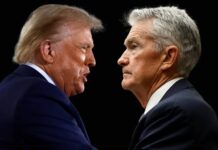
Trump also hinted at a near-term announcement for a new Federal Reserve chair, with Jerome Powell’s term set to expire in May. The signal alone stirred speculation about future monetary policy, inflation control, and market volatility.

Dimon, a frequent focal point at Davos, expressed fatigue over repeated questions about Trump’s agenda, bluntly remarking, “What the hell else do you want me to say?” Still, he acknowledged that tariffs remain a strategic “pressure point” on China, even as concerns grow over ballooning U.S. deficits.
Former Federal Reserve Vice Chair Lael Brainard offered a more structural warning, noting that AI-driven productivity gains risk concentrating growth at the top while leaving much of the broader economy stagnant.
Dimon added a sobering forecast of his own: JPMorgan is likely to employ fewer people within five years due to AI adoption — a stark reminder of looming workforce disruptions.
Technology Takes Center Stage: AI, Automation, and Robotics
If there was one dominant theme at Davos 2026, it was artificial intelligence.
Nvidia CEO Jensen Huang dismissed fears of an AI bubble, calling current infrastructure spending “sensible” and describing AI development as a “five-layer cake” — complex, foundational, and still in its early stages. In a discussion with BlackRock CEO Larry Fink, Huang argued that AI will ultimately create more jobs than it eliminates, though not without painful transitions.
Elon Musk once again delivered some of the summit’s most headline-grabbing moments. The Tesla and SpaceX CEO predicted that humanoid robots will reach the consumer market by the end of next year, eventually becoming as common as smartphones. He also projected widespread adoption of Tesla’s Robotaxi services in the U.S. before 2027, alongside rapid progress toward full self-driving vehicles.
Other tech leaders offered more measured optimism. Affirm CEO Max Levchin argued that AI will fundamentally transform retail without replacing major players like Walmart. Reddit co-founder Alexis Ohanian highlighted AI’s potential to democratize access to knowledge, particularly in education and agriculture.
President Trump, however, injected skepticism into the AI frenzy, openly questioning Meta’s reported $50 billion investment in AI data centers: “How do you spend $50 billion?” he asked, echoing concerns among investors about capital efficiency and returns.

Geopolitics: Trade, Security, and Strategic Alliances
Geopolitical tensions ran beneath nearly every discussion.
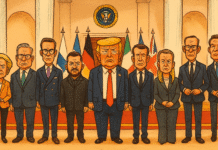
Trump reignited controversy by reiterating U.S. interest in acquiring Greenland — not for rare earth minerals, he claimed, but for “international security.” He warned that NATO allies unwilling to support such moves could face tariffs, linking economic pressure directly to defense commitments.
U.S.–China relations also loomed large. While tariffs remain a central tool of U.S. policy, leaders acknowledged the growing difficulty of full economic decoupling. Dimon emphasized the complexity of maintaining competition without triggering systemic instability in global markets.
Energy, Sustainability, and the Bigger Picture
While sustainability was not the headline focus of Davos 2026, it surfaced indirectly through energy discussions. The prevailing tone favored an “all-of-the-above” strategy, emphasizing expanded domestic energy production as a hedge against geopolitical risk and supply shocks.
The absence of a strong climate narrative itself spoke volumes, reflecting a broader shift toward economic security and industrial resilience over long-term environmental commitments.
What Davos 2026 Signals for Markets and Investors
Davos 2026 delivered a clear message: the world is entering a high-volatility era defined by policy uncertainty, technological acceleration, and geopolitical recalibration.
Artificial intelligence is widely seen as the next major growth engine — but one that may deepen inequality and displace workers before benefits are broadly shared. At the same time, aggressive trade policies and potential shifts in U.S. monetary leadership could inject fresh turbulence into global markets.
For investors, executives, and policymakers alike, Davos reinforced a central truth of the moment: in an age of disruption, the intersection of government power and technological influence will define the financial landscape ahead.