|
Getting your Trinity Audio player ready...
|
Austria’s far-right Freedom Party (FPO) achieved a historic victory in Styria’s state election on Sunday, marking the first time it has claimed leadership in the region. This significant win follows the party’s strong performance in September’s general election and underscores its growing influence amid ongoing national coalition negotiations.
Styria, home to Graz—Austria’s second-largest city—holds limited immediate national sway. However, this outcome adds pressure on political leaders striving to establish the nation’s first three-way coalition government since 1949.
This is only the second state the FPO has ever won. The first was Carinthia, previously a stronghold of the party under Joerg Haider during his leadership in the late 1990s and early 2000s.
“There’s been a landslide in Styria. I didn’t expect such a resounding result,” said Stefan Hermann, the FPO’s deputy leader in Styria, during an interview with national broadcaster ORF.

According to a projection by pollster Foresight for ORF and APA, the FPO is leading with 35.3% of the vote, followed by the conservative People’s Party (OVP) at 26.6%. The estimate, which is based on 70% of votes counted, has a margin of error of 1 percentage point.
For the first time since World War II, neither the OVP nor the Social Democrats (SPO) have emerged victorious in Styria. This marks a dramatic shift in the political landscape of the state, famously known as the birthplace of actor Arnold Schwarzenegger.

Despite its success, the FPO will need to form a coalition to secure a majority in Styria’s state assembly and establish a governing administration. Unlike national elections, where the president decides who is tasked with forming a government, Styria’s rules automatically grant the leading party—now the FPO—the opportunity to set up a state government.
This victory reinforces the FPO’s growing foothold in Austrian politics, signalling a changing tide as the country navigates complex coalition talks at the federal level.
“There’s been a landslide in Styria. I didn’t expect such a resounding result.”
— Stefan Hermann, Deputy Leader of the Freedom Party in Styria
- (no title)
Cristiano Ronaldo: “I decided to leave the camp without waiting for any further breach of word. For me the truth is still the most important thing in the relationship between people. However much it hurts, let them tell me the truth.
In fact, in a conversation I had with the President of the FPF and with the coach on the morning of the day of that press conference — they can certainly confirm this — I reaffirmed that if they did not want me there they should tell me. It was enough for them to be frank with me. I would accept that and I promised that we would prepare something beautiful, as I dream will happen, and no one would be left angry.
I remember it as if it were today. They replied in unison that no. That my place was in the National Team.
Never, at any moment, have I interfered in any technical or tactical decision of any coach or national team manager in almost 25 years of career.
I accept, for better or worse, what they propose that I do. I respect the decision, and when they break their word to me, I feel that my place is not there.
I also owe an apology to my national team teammates for having left the camp.
Despite the absolute breach of trust in the coach’s word, as those who witnessed these conversations can attest, I should not have done it. The responsibility is exclusively mine.
I apologise to the Portuguese people once again, but the breaking of one’s word has, for me, a defining impact. I felt that, from that point on, my remaining would only harm the working group, and I did what I have always said I would do if I did not feel useful: I packed my bags and left.
The consequence of this act of mine must be assessed and punished by the Portuguese Football Federation. I understand that the punishment should have no mitigating factors. I am not just any player; I am team captain, and that constitutes an aggravating factor.
I have already apologised, but I know that attitudes must have consequences. Anyone who is in football as I am knows that, regardless of each person’s status, the rules are the same for everyone.
On this subject, I have heard a great deal of talk about farewell matches, that I must have a dignified farewell and that the Federation wants to give me that opportunity.
I learned in life, often hungry and with nothing to eat, that no one gives anything to anyone.
I can promise all my fans, naturally and especially all Portuguese people, that we will have one or more farewell matches; there will be time for that.
But when I think of the national team, what I really think of is competing. That is what I thought on the day I was given the news of my father’s death.
I was at a camp with our national team and I decided to stay there until the end of the match the following day. I did for the country what I would never do for any club.
Therefore, if I am physically well, playing for my club, with goals I hope, after serving the suspension that may be applied to me, I will be available, as I have always been until today, to compete and win for our national team.
This is, believe me, the purest of truths.
Cristiano Ronaldo”. - Everyone Rooted for the Rise. Now They Want the Fall.
Manchester City have been found guilty on 114 of 115 Premier League charges. The independent commission’s decision, reported on Friday, lands like a long-delayed verdict after years of investigation, hearings, and silence. Sanctions have not yet been decided. An appeal is almost certain. The club maintains the process is still ongoing and has always denied wrongdoing.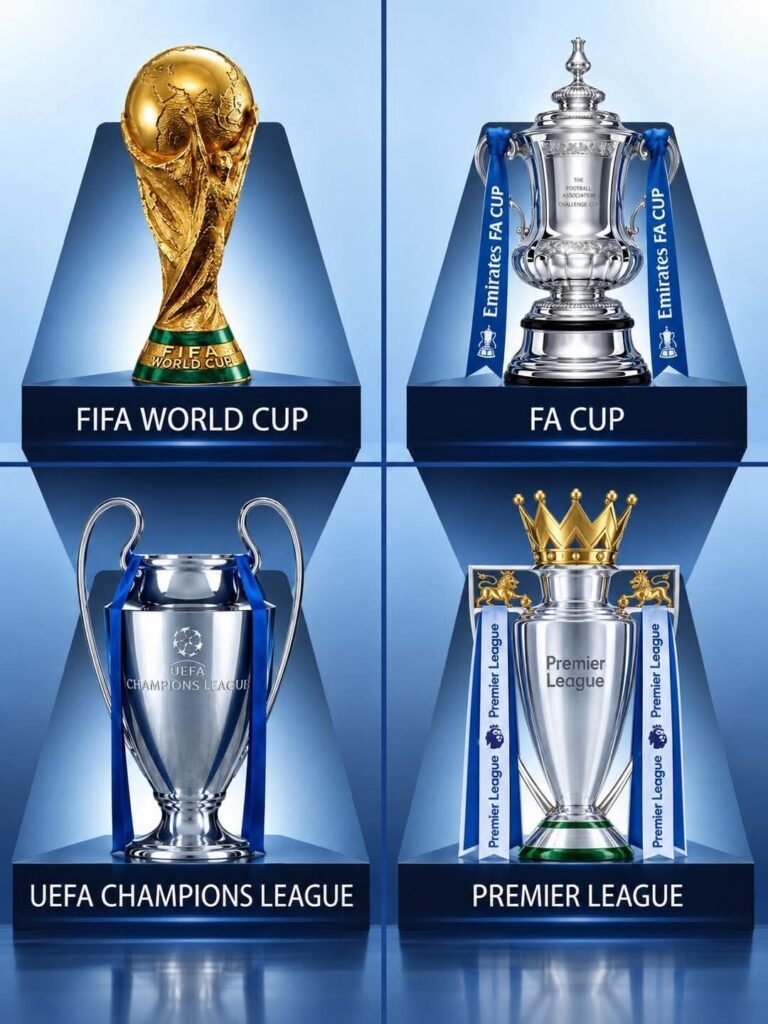
Yet the reaction across much of English football has been less about due process and more about satisfaction. For many, this is not primarily a story about financial regulations. It is a story about a club that rose too far, too fast, and refused to stay in its place.
City were not always the villains. When Sheikh Mansour’s takeover arrived in 2008, the club were a modest force in the Premier League, occasionally competitive, frequently frustrated.The transformation that followed titles, Champions League glory, a modern footballing machine was remarkable. For a time, some neutrals even admired the ambition. Then the admiration curdled. Success stopped looking romantic and started looking threatening. The same voices that once treated City as an entertaining underdog project began treating every trophy as evidence of a deeper crime.
This is the pattern. People love the story of the rise. They are far less generous once the rising party actually arrives at the top. The narrative shifts from “good for them” to “something must be wrong.” Scrutiny intensifies. Every sponsorship deal, every wage structure, every accounting choice becomes suspicious in a way that rarely applies with equal force to older, more established powers. The rules exist for a reason, and serious breaches should be punished. But the selective intensity of the outrage, the open glee in certain quarters, and the long-running atmosphere of moral superiority reveal something beyond pure regulatory concern.
Football has always had its hierarchies and its resentments. Clubs with new money challenge the old order and discover that the old order has long memories and sharp elbows. City’s dominance under Pep Guardiola did not just win silverware; it disrupted assumptions about who is allowed to be dominant. The charges, whatever their ultimate legal outcome, have become a convenient vessel for that broader discomfort.This news about man city charges have showed how Manchester City is been hated. It proves that everyone want you to succeed until you succeeded then they want you to fail. #life
There is a larger life lesson here that extends past the Premier League table. Everyone claims to want you to succeed until you actually do. Then the same people who cheered the early chapters start looking for the ending that restores the previous ranking. Success does not simply attract admiration. It attracts scrutiny, envy, and a quiet hope that the successful party will eventually be cut down to size. City have lived that dynamic in public for more than a decade.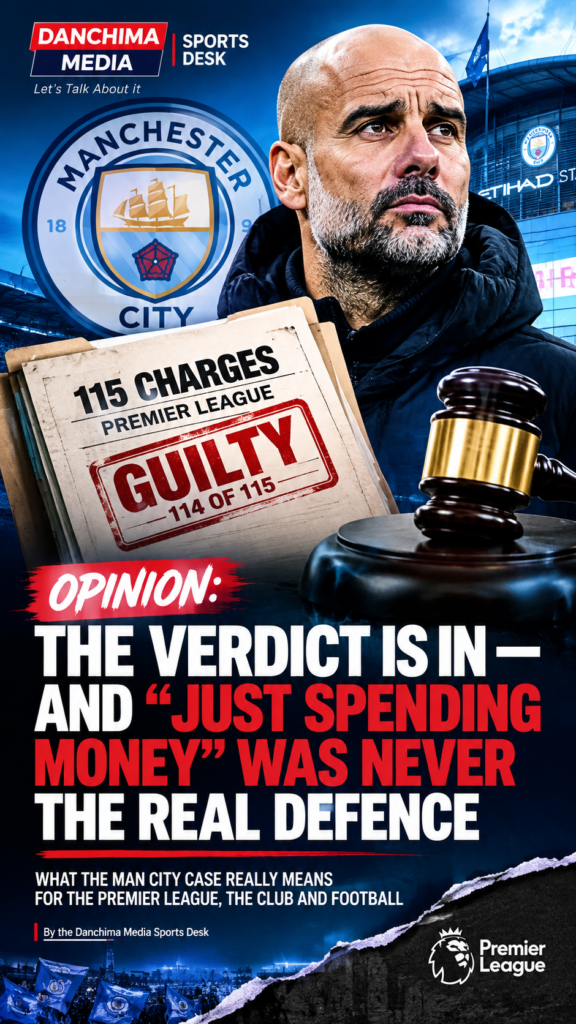
None of this means the club is above the rules or that an independent process should be ignored. If the findings hold on appeal and serious breaches are confirmed, consequences will follow, and they should. But the surrounding noise the celebratory tone, the selective historical memory, the eagerness to treat one club’s alleged misconduct as uniquely corrosive tells its own story. It is not only about financial fair play. It is about who is permitted to keep winning once they have started.
City will fight the decision. The legal process will grind on. Rivals will continue to watch with interest. And the underlying pattern will remain familiar: the world is often more comfortable with potential than with realized power. Everyone wants you to succeed until you have.
- Trump Shuts CNN, Politico and MSNOW Out of the White House
President Donald Trump announced Friday that CNN, Politico and MSNOW will no longer be permitted inside the White House, blaming what he described as their “constant ‘reporting’ FAKE NEWS!”
In a Truth Social post, Trump argued that news organizations should not be free to publish “FICTION and LIES” about the president, his administration or the country. He also signaled that additional outlets could face similar restrictions in the future.The president singled out Politico for particular criticism, claiming the publication was kept afloat by an “illegal” and “ridiculous” $8 million subscription arrangement under former President Joe Biden. Trump alleged the money was paid “directly” to sustain the outlet and labeled the deal “corruption.”
- Vance Backs White House Press Restrictions, Calls Targeted Outlets “Propaganda” Machines
Vance Backs White House Press Restrictions, Calls Targeted Outlets “Propaganda” Machines….
Vice President JD Vance on Monday came out in defense of the Trump administration’s move to shut CNN, MS NOW and Politico out of the White House, arguing that a Republican administration has no obligation to extend privileged access to outlets he says push a partisan agenda.
Appearing on Fox News, Vance questioned why the White House should reward what he called “far left propaganda” with preferential treatment. He said the bulk of what the three outlets publish about the administration is negative in tone.
Vance also pushed back on the idea that the outlets are being silenced, noting they can still cover the administration and obtain public information. In his framing, the restriction only affects “special access” to the building itself.The three organizations have filed suit, contending the ban violates their First Amendment rights. Several other major news organizations have declined to cover the administration in a show of solidarity with the excluded outlets.
- Spurs, Chelsea and Fulham RELEGATED? Our Shock 2026-27 Premier League Prediction Will Split the Nation
Yes, we said Chelsea. Before you hit the comment button, look at the numbers…
Every Premier League season produces predictions that age beautifully — and predictions that look ridiculous by Christmas.
So, rather than following the usual script of automatically putting the established giants near the top and the promoted clubs near the bottom, we’re going for something much more controversial.
Our current prediction for the final 2026/27 Premier League table has Tottenham Hotspur, Fulham and Chelsea occupying the three relegation places.
It is a deliberately bold call.
And no, Chelsea are not currently in the relegation zone. They are ninth after five matches with seven points.
But football is about where a team is heading as much as where it is standing today.
The Reality Check: Where Are They Now?
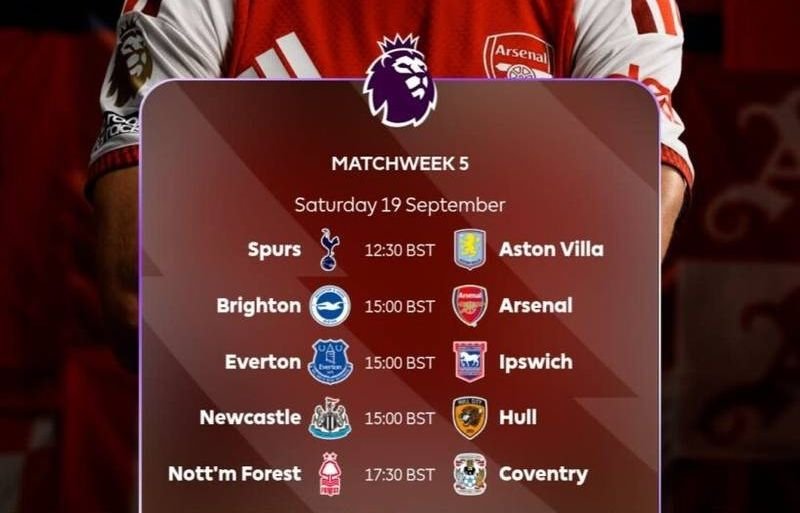
The latest table, following Saturday’s matches on September 19, has Manchester City top with 12 points from four games, Arsenal second on 12, Brighton third on 10 and Brentford fourth on nine.
Chelsea are ninth with seven points. Tottenham are 19th with two points.
Fulham are bottom with one point — although they have played only four league matches ahead of Sunday’s meeting with Manchester United.
That makes our prediction controversial, but it isn’t completely detached from the evidence.
19th — Tottenham Hotspur
The warning signs are already flashing
Tottenham’s start is arguably the clearest reason to take a relegation prediction seriously.
Spurs have played five league matches and remain without a victory. Their record is two draws and three defeats, leaving them with only two points and a -6 goal difference. Saturday’s 3-2 home defeat to Aston Villa made matters worse.
Tottenham actually started brightly, but Villa eventually opened them up and moved three goals ahead before Spurs scored twice late on. The result left Roberto De Zerbi’s side winless after five matches and in 19th place.
There is another statistic that makes uncomfortable reading: Spurs have now gone 48 consecutive matches in all competitions without winning after conceding first. That’s an enormous psychological and tactical problem to carry through a Premier League season.
The squad has also undergone a major rebuild, with more than £300 million reportedly invested during the summer. But spending money and building a team capable of surviving pressure are two different things.
Recent Premier League form
– Brentford 1-0 Tottenham
– Tottenham 0-2 Newcastle United
– Nottingham Forest 0-0 Tottenham
– Tottenham 0-0 Everton
– Tottenham 2-3 Aston Villa
Prediction: 19th — relegated.
Spurs have time to recover, but their current trajectory is difficult to ignore.
20th — Fulham
The quiet crisis at Craven Cottage. Fulham are currently bottom of the Premier League with one point from four matches.Their league results so far:
– Fulham 2-3 Chelsea
– Sunderland 1-0 Fulham
– Fulham 2-3 Crystal Palace
– Liverpool 0-0 Fulham
That is three defeats, one draw and no wins.
The goalless draw at Anfield was at least a positive defensive result, but Fulham have still conceded seven goals in their opening four league matches.
New manager Álvaro Arbeloa has already been dealing with a difficult start, with Reuters reporting concerns around Fulham’s defensive vulnerabilities.
The interesting thing is that Fulham have shown attacking promise. Against Crystal Palace, for example, they created opportunities and scored twice.
The problem is turning encouraging performances into points. And that’s what ultimately decides relegation battles.
Prediction: 20th — relegated.
18th — Chelsea
Here’s the prediction that will cause the argument This is the one.
Chelsea are not currently a relegation team. They’re ninth. They have seven points. They have won two of their first five league matches. So why put them 18th? Because their defensive numbers are difficult to ignore. Chelsea opened the season with a 3-2 win at Fulham, followed it with a spectacular 4-3 victory over Brighton, lost 2-1 to Arsenal, drew 2-2 with Hull City and then suffered a 3-0 defeat at Brentford. That’s 12 goals conceded in five league matches.
The Brentford defeat was particularly concerning. Chelsea had 60% possession and controlled large portions of the ball, but Brentford were more effective where it mattered, eventually winning 3-0. The result extended Chelsea’s run without a league clean sheet to 21 matches.
That is the statistic that makes our prediction interesting.
Chelsea clearly possess attacking quality. Morgan Rogers has made an excellent start, while the team has already demonstrated that it can score heavily.
But the question is whether Chelsea can consistently control matches at the other end. If the defensive problems continue, a team can quickly move from entertaining to vulnerable. And that is where our prediction becomes extremely bold: Chelsea finish 18th.
Not because they’re currently there. Because we’re predicting that their defensive instability eventually catches up with them over 38 matches.
Our Predicted 2026/27 Premier League Final Table
Pos| Club| Danchima prediction
1| Manchester City| Champions
2| Brentford| Surprise challengers
3| Arsenal| Title contenders
4| Liverpool| Champions League
5| Manchester United| European football
6| Brighton & Hove Albion| Breakthrough season
7| Leeds United| Comfortable survival
8| Hull City| Outstanding promoted campaign
9| Everton| Solid season
10| Newcastle United| Mid-table
11| Nottingham Forest| Mid-table
12| Aston Villa| Recovery after difficult start
13| Sunderland| Survival
14| Ipswich Town| Survival
15| Bournemouth| Survival
16| Crystal Palace| Survival
17| Coventry City| Late escape
18| Chelsea| RELEGATED
19| Tottenham Hotspur| RELEGATED
20| Fulham| RELEGATED
This is a Danchima Media prediction, not a statement of the current standings.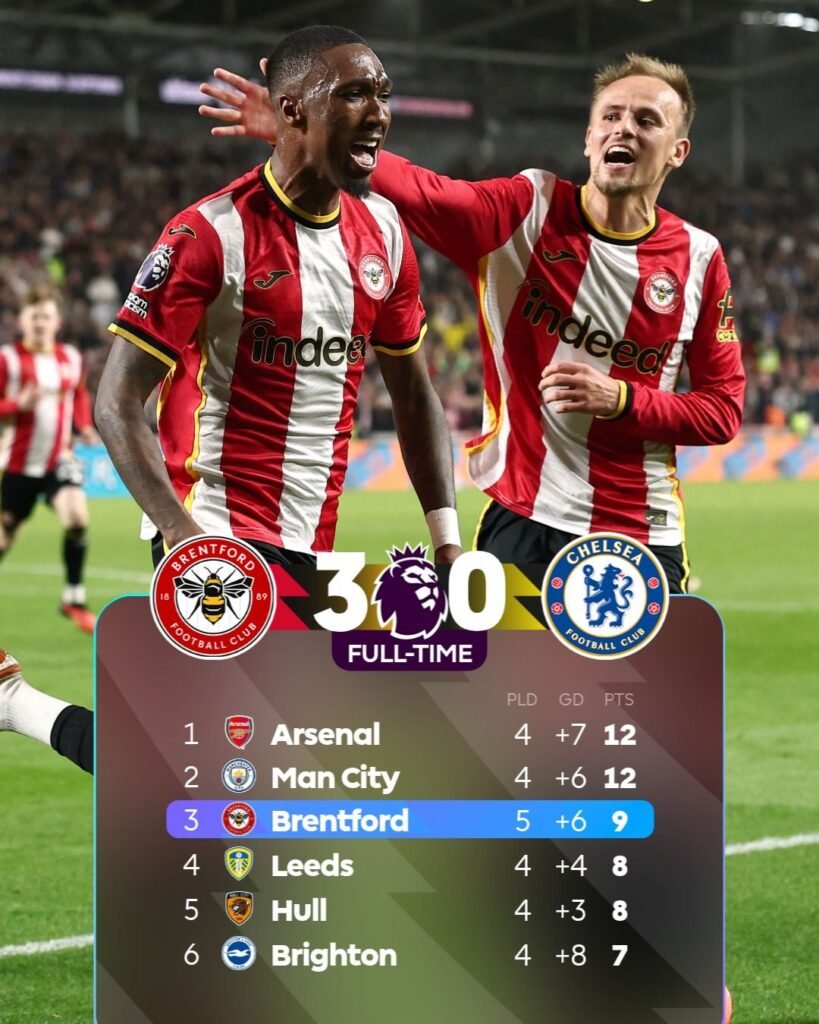
Why Manchester City at No. 1?
City have won all four of their league matches so far and currently sit top on 12 points with a +6 goal difference. Arsenal also have 12 points but have played five matches and suffered their first defeat of the campaign at Brighton on September 19. City therefore get the nod in our prediction because their early results have been extremely consistent. However, there is a long way to go.
Why Brentford at No. 2?
This is another huge call.
Brentford are unbeaten after five matches, with two wins and three draws, and sit fourth on nine points.
Their latest result was perhaps their biggest statement yet: a 3-0 victory over Chelsea.
That result maintained their unbeaten start and demonstrated that the early-season momentum isn’t simply coming from one surprise result.
Can Brentford maintain that over 38 matches?
That’s the question.
Our prediction says they can remain one of the season’s biggest stories.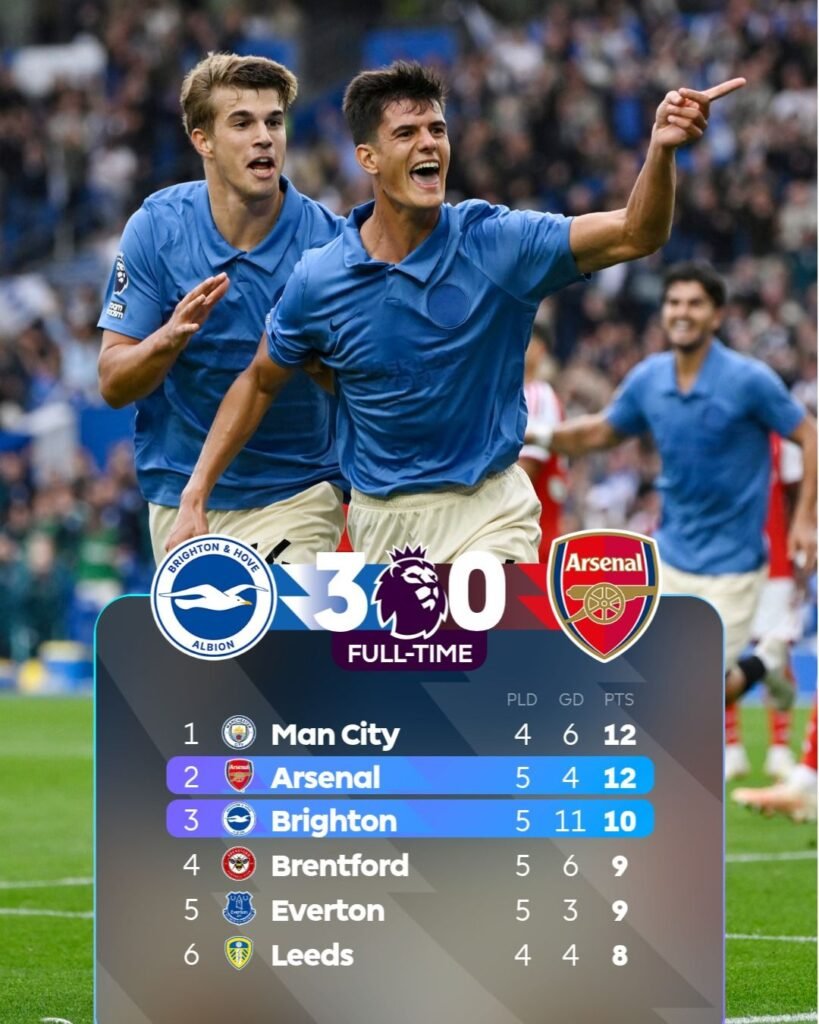
And Arsenal?
Arsenal started the season with four consecutive wins and looked capable of defending their Premier League crown.
Then came Brighton.
A 3-0 defeat on September 19 ended their perfect start and dropped them to second behind Manchester City on goal difference.
That defeat doesn’t suddenly erase Arsenal’s excellent opening four matches.
But our prediction has City eventually edging them in the title race.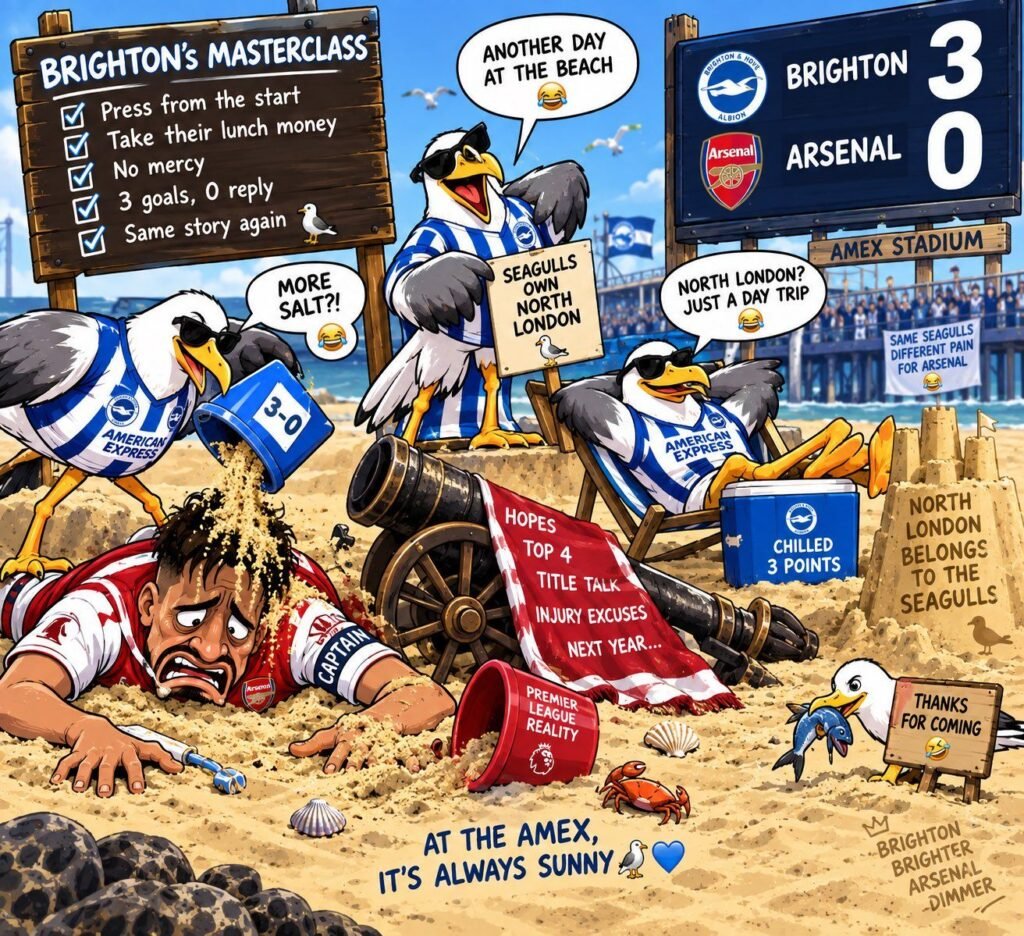
The Chelsea Question
Let’s be completely clear.
Predicting Chelsea to finish 18th is not the same thing as saying Chelsea are currently a relegation candidate based on the table. They aren’t. They’re ninth.
They have seven points.
They have already beaten Fulham and Brighton.
But they have also conceded 12 goals in five league matches, failed to keep a league clean sheet in 21 games and have just been beaten 3-0 by Brentford.
That’s why this prediction exists.
It is a what-if scenario based on their current weaknesses, not a claim that relegation is already inevitable.
And that’s what makes the prediction fun. Football Doesn’t Follow the Script
Five matches into a 38-game Premier League season, nobody knows how this story ends. Tottenham can recover.
Fulham can turn their narrow defeats into victories.
Chelsea can fix their defensive problems and make this prediction look completely ridiculous.
That’s football.
But if we are making our prediction based on what we’ve seen so far, we’re going against the obvious choices.
Manchester City for the title.
Brentford as the surprise package. And at the other end… Chelsea, Tottenham and Fulham to go down.
It’s a prediction. It’s deliberately bold.
And by May, we will either be celebrating it — or pretending this article never existed.
What do you think? Who are your three relegation picks for 2026/27?






I don’t think the title of your article matches the content lol. Just kidding, mainly because I had some doubts after reading the article.
Bwer Company is a top supplier of weighbridge truck scales in Iraq, providing a complete range of solutions for accurate vehicle load measurement. Their services cover every aspect of truck scales, from truck scale installation and maintenance to calibration and repair. Bwer Company offers commercial truck scales, industrial truck scales, and axle weighbridge systems, tailored to meet the demands of heavy-duty applications. Bwer Company’s electronic truck scales and digital truck scales incorporate advanced technology, ensuring precise and reliable measurements. Their heavy-duty truck scales are engineered for rugged environments, making them suitable for industries such as logistics, agriculture, and construction. Whether you’re looking for truck scales for sale, rental, or lease, Bwer Company provides flexible options to match your needs, including truck scale parts, accessories, and software for enhanced performance. As trusted truck scale manufacturers, Bwer Company offers certified truck scale calibration services, ensuring compliance with industry standards. Their services include truck scale inspection, certification, and repair services, supporting the long-term reliability of your truck scale systems. With a team of experts, Bwer Company ensures seamless truck scale installation and maintenance, keeping your operations running smoothly. For more information on truck scale prices, installation costs, or to learn about their range of weighbridge truck scales and other products, visit Bwer Company’s website at bwerpipes.com.