For years, Pep Guardiola has stood as the defining force in English football — the standard every coach measured themselves against, the architect of dominance at Manchester City. But at Wembley, under the bright lights of the EFL Cup Final, the narrative began to twist.
This was no ordinary final. It was a meeting of master and apprentice, of past dominance and present momentum, of a dynasty under pressure and a challenger sensing its moment.
Before kickoff, the tension was already visible in Guardiola’s thinking. He wrestled with his approach: whether to unleash the attacking version of City seen in recent weeks or return to the more controlled system that had previously contained Arsenal. Even within that choice lay uncertainty — could his midfield, at times exposed this season, hold firm on such a stage? Recent encounters, especially against Real Madrid, had offered uncomfortable lessons.
Across the technical area, Mikel Arteta appeared calmer. His Arsenal side arrived with fewer doubts, built on structure, repetition, and a clear identity. While selection decisions remained, the system itself was settled. It was a reflection of how far Arsenal had come — no longer imitators of Guardiola, but a team with their own voice.
Only weeks earlier, this final had been framed as crucial for Arsenal — a psychological stepping stone in their pursuit of a long-awaited Premier League title. Yet football moves quickly. City’s elimination from Europe and dropped points in the league had shifted the landscape. Arsenal now carried momentum, while City’s aura of inevitability had begun to fade.
By kickoff, the stakes had subtly reversed. This final felt heavier for Guardiola than for Arteta.
Then came the game itself.
For a brief moment, there was balance. Arsenal started brightly, forcing early saves and feeding off Wembley’s electric atmosphere. But it didn’t last. Within minutes, the rhythm shifted, and from there City took control in a way that felt both familiar and ominous.
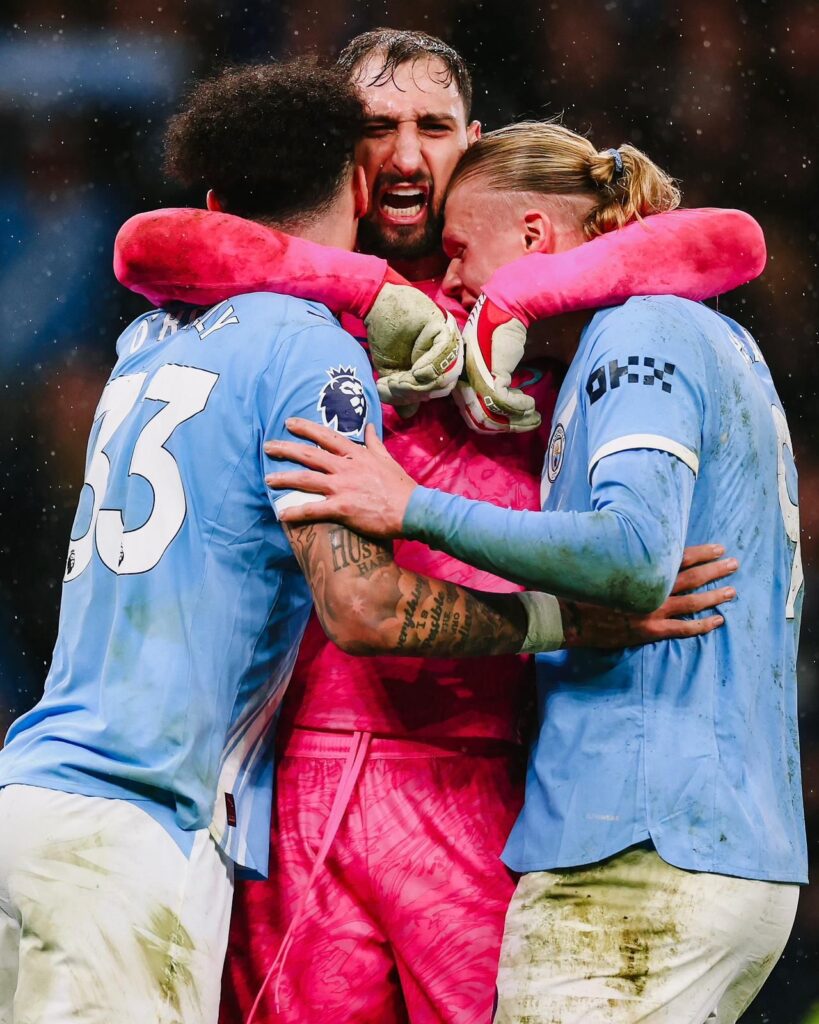
When the breakthrough arrived just after the hour, Guardiola reacted in his own unmistakable style — animated, intense, almost theatrical. By the time Nico O’Reilly added a second minutes later, the City manager was in full flow, sprinting down the touchline, arms pumping, embodying the release of a team rediscovering itself.
On the pitch, City were dominant in every sense. They didn’t just control possession; they controlled space, tempo, and rhythm. It was a performance that echoed their peak years — fluid, suffocating, and precise. The midfield dictated everything, while wide players stretched Arsenal beyond their comfort zone.
For long stretches, it felt like Arsenal were simply being guided around the pitch.
And that is what made the contrast so stark.
This Arsenal team, built on intensity and structure, suddenly looked uncertain. Patterns disappeared. Pressing lost its edge. For a period, it was as though the players had forgotten the very principles that defined them. A team chasing history instead appeared disconnected, searching for answers that never came.
Even moments of resistance felt isolated rather than collective.
Kepa Arrizabalaga’s involvement in the opening goal drew attention, but the issues ran far deeper. The midfield lost cohesion, the attack lacked spontaneity, and the team struggled to adapt when their initial plan failed. City’s width and tactical variation exposed gaps that Arsenal could not close.
It was not just a defeat — it was a disintegration.
And yet, this is where the story becomes more compelling.
Because while City reminded everyone of their enduring quality, the bigger question now surrounds Arsenal. Not whether they can win, but how they respond when they lose. Great teams are not only defined by triumph, but by their ability to recover from moments like this.

The timing makes it even more significant. With a crucial league meeting still to come, the psychological impact of this result could ripple into the title race. Arsenal had built confidence, even whispers of something historic. This result challenges that belief.
For City, the victory does more than deliver silverware. It reasserts presence. It disrupts momentum. It reminds the league that their era is not over yet.
For Guardiola, it is also something personal. At a time when questions swirl about his future, he has the chance to shape the narrative — not as a fading force, but as a figure still capable of deciding outcomes at the highest level.
There is a certain irony in it all.

Years ago, Arteta stood beside Guardiola, learning the methods that would define his own coaching journey. Now, the student is pushing to surpass the master. But on this occasion, the master struck back.
The balance of power has not fully shifted — not yet.
But it is moving.
And as the season reaches its climax, the real question is no longer whether Arsenal can rise, but whether they can do so after being pulled back down.






Backbiome is an advanced daily wellness supplement formulated to help support spinal comfort, reduce feelings of built-up tension, and promote freer, smoother movement throughout everyday life.
Boostaro is a modern mens wellness formula created to support daily vitality, stamina, and confidence through a practical, natural routine.
GL Pro is a natural dietary supplement formulated to help maintain steady, healthy blood sugar levels while easing persistent sugar cravings.
Backbiome is an advanced daily wellness supplement formulated to help support spinal comfort, reduce feelings of built-up tension, and promote freer, smoother movement throughout everyday life.
AquaSculpt is a high-quality metabolic support supplement created to help the body utilize fat more efficiently while maintaining steady
PurDentix is a revolutionary oral health supplement designed to support strong teeth and healthy gums. It tackles a wide range of dental concerns, including gum inflammation and tooth decay
NerveCalm is a high-quality nutritional supplement crafted to promote nerve wellness, ease chronic discomfort, and boost everyday vitality.
ProDentim is a modern oral-health supplement formulated with specialized probiotics and naturally sourced ingredients to help maintain firm teeth
ProDentim is a distinctive oral-care formula that pairs targeted probiotics with plant-based ingredients to encourage strong teeth, comfortable gums, and reliably fresh breath.