International health authorities are closely monitoring a deadly hantavirus outbreak linked to the cruise ship MV Hondius after multiple infections and three reported deaths triggered a large-scale international evacuation and quarantine operation.
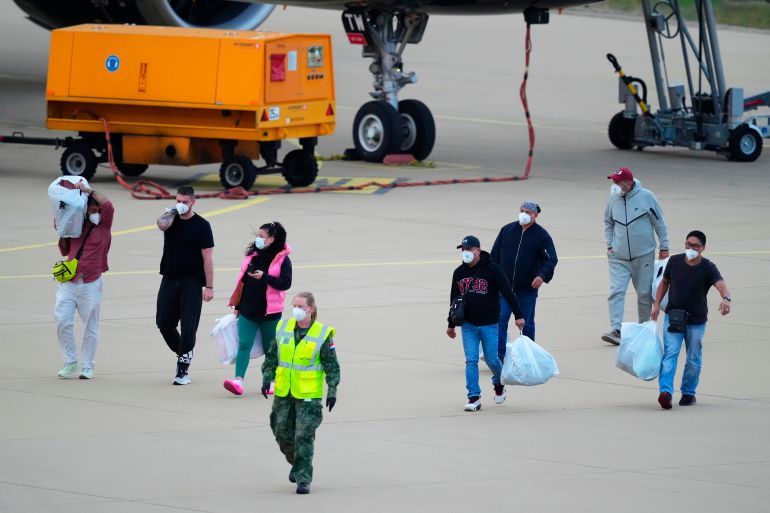
The latest development came after the final group of passengers and crew members evacuated from the vessel safely arrived in the Netherlands. Meanwhile, officials in the United States confirmed that one American passenger tested positive for the virus after returning home, bringing the total number of confirmed infections to seven.
According to U.S. health authorities, 18 American passengers are currently under quarantine and medical observation at specialized treatment facilities. Officials stated that the infected individual is being monitored alongside other passengers who may have been exposed during the voyage.
The outbreak has raised international concern because the strain involved — the Andes hantavirus — is the only known form of hantavirus capable of limited person-to-person transmission through prolonged close contact. Most hantavirus infections are typically linked to exposure to infected rodents.
The MV Hondius departed southern Argentina on April 1 for an expedition cruise across the Atlantic Ocean before the first symptoms reportedly appeared onboard. Health experts from the World Health Organization believe the initial infection likely occurred before the ship left Argentina, with additional cases spreading during the voyage.

Understanding Hantavirus
Hantavirus is a rare but potentially serious viral disease commonly spread through exposure to infected rodents or their droppings. Symptoms can initially resemble the flu but may rapidly progress into severe respiratory complications.
The Andes strain, first identified in South America, is considered particularly concerning because it has shown the ability to spread between humans under certain conditions involving close and prolonged contact.
Health experts continue to emphasize that casual public exposure carries very low risk.
Reporting by Danchima Media
So far, three people connected to the outbreak have died, including a Dutch couple and a German passenger. Authorities are also investigating additional suspected cases reported in other regions linked to the voyage.
Despite the seriousness of the outbreak, global health officials continue to reassure the public that the overall risk remains low. Speaking from Tenerife in Spain’s Canary Islands, WHO Director-General Tedros Adhanom Ghebreyesus stressed that the situation should not be compared to the COVID-19 pandemic.
“There is nothing to fear. The risk is low. This is not another COVID,” Tedros said while addressing concerns surrounding the outbreak.
The WHO has recommended that all passengers and crew members complete a 42-day quarantine and monitoring period as a precautionary measure.
Passengers from nearly 20 countries have now been repatriated, with authorities across Europe, North America, and other regions coordinating follow-up monitoring and testing procedures.
Meanwhile, the cruise ship itself is currently sailing toward Rotterdam in the Netherlands, where it will undergo a full disinfection process before any future operations can resume. The vessel operator, Oceanwide Expeditions, confirmed that a reduced operational crew and medical personnel remain onboard during the transit.
The Centers for Disease Control and Prevention and other international health agencies continue to monitor the situation closely as investigations into the outbreak remain ongoing.
- (no title)
 Spread the love 1 1Share Cristiano Ronaldo: “I decided to leave the camp without waiting for any further breach of word. For me the truth is still the most important thing in the relationship between people. However much it hurts, let them tell me the truth.… Read more: (no title)
 - Everyone Rooted for the Rise. Now They Want the Fall.
 Spread the love 1 1Share Manchester City have been found guilty on 114 of 115 Premier League charges. The independent commission’s decision, reported on Friday, lands like a long-delayed verdict after years of investigation, hearings, and silence. Sanctions have not yet been decided. An appeal is… Read more: Everyone Rooted for the Rise. Now They Want the Fall.
 - Trump Shuts CNN, Politico and MSNOW Out of the White House
 Trump announced Friday that CNN, Politico and MSNOW are barred from the White House over what he called “FAKE NEWS,” warning more outlets could follow. He also accused Politico of receiving an “illegal” $8 million subscription under Biden.
 - Vance Backs White House Press Restrictions, Calls Targeted Outlets “Propaganda” MachinesVice President JD Vance defended the Trump administration’s decision to bar CNN, MS NOW and Politico from the White House, arguing that outlets engaged in what he called “far left propaganda” shouldn’t expect special access from a Republican administration. The three outlets have sued, citing First Amendment concerns.
- Spurs, Chelsea and Fulham RELEGATED? Our Shock 2026-27 Premier League Prediction Will Split the Nation
 Could Chelsea, Tottenham and Fulham really be heading for relegation? It sounds outrageous — especially with Chelsea currently sitting comfortably outside the bottom three. But early-season results are already raising questions. Danchima Media makes its bold 2026/27 Premier League prediction, with Manchester City tipped for the title and three London clubs facing a dramatic fight for survival.