
|
Getting your Trinity Audio player ready...
|
This season’s EFL Cup Final carries a level of importance rarely seen for a competition often viewed as secondary. The tension around the match reflects more than just the pursuit of silverware — it speaks to shifting momentum, identity, and possibly the direction of the title race itself.
In the lead-up to the game, Pep Guardiola has been wrestling with key tactical decisions. There is uncertainty over whether Manchester City should continue with their recent attacking style or return to the more cautious setup that earned them a draw earlier in the campaign. Even within that choice lies another dilemma: whether their current midfield structure is too open for a high-profile final, especially after the lessons learned against Real Madrid. The approach Guardiola ultimately chooses will say a great deal about how he views both his team and this moment.
For Mikel Arteta, the situation is quite different. While he will consider specific personnel decisions, his system remains largely settled. Arsenal have developed a clear identity, and that consistency means far fewer uncertainties heading into the final. Only weeks ago, this match was seen as vital for Arsenal’s mentality, a potential springboard in their pursuit of a first Premier League title in over two decades. At the time, it even felt like the beginning of a series of defining encounters between the two sides.
However, events in recent weeks have altered that perspective significantly. City’s exit from European competition and dropped points domestically have weakened their once-dominant aura, allowing Arsenal to build a stronger advantage at the top of the table. While the title race is not yet decided, the sense of inevitability that once surrounded City has faded. They no longer appear untouchable.

Because of that shift, the pressure attached to this final has subtly changed. What once seemed essential for Arsenal now feels more critical for City. For Guardiola, the prospect of ending the season without major honours is becoming increasingly real, particularly with ongoing talk about his future. A victory would not just add another trophy; it would reassert control and remind everyone of the hierarchy that has defined recent years.
For Arsenal, the urgency is less pronounced. Although this group has yet to win a major trophy together and would undoubtedly benefit from doing so, the current version of City does not carry the same intimidating presence. The psychological burden is lighter, and the team appears to be operating with greater calm.
A win for City could disrupt that calm. It would inject doubt into Arsenal at a moment when confidence is building, especially with whispers of a historic campaign beginning to surface. Extending Arsenal’s wait for silverware could reopen familiar questions and potentially create space for setbacks later in the season. At the same time, defeat would be equally damaging for City. Losing this final, combined with their recent struggles, could deepen uncertainty and risk a broader collapse.
On the pitch, City have often looked like a team caught between brilliance and vulnerability. There are flashes of their old attacking dominance, but these are frequently undermined by defensive lapses. Matches have become unpredictable, swinging from control to chaos within moments. It is a far cry from the relentless consistency that once defined Guardiola’s side.
Arsenal, in contrast, appear more composed. Within their camp, the mood is measured rather than tense. The distance at the top of the table has allowed for a sense of stability, and this match is almost seen as a break from the constant intensity of the title race. Yet that calm could quickly disappear depending on the outcome.
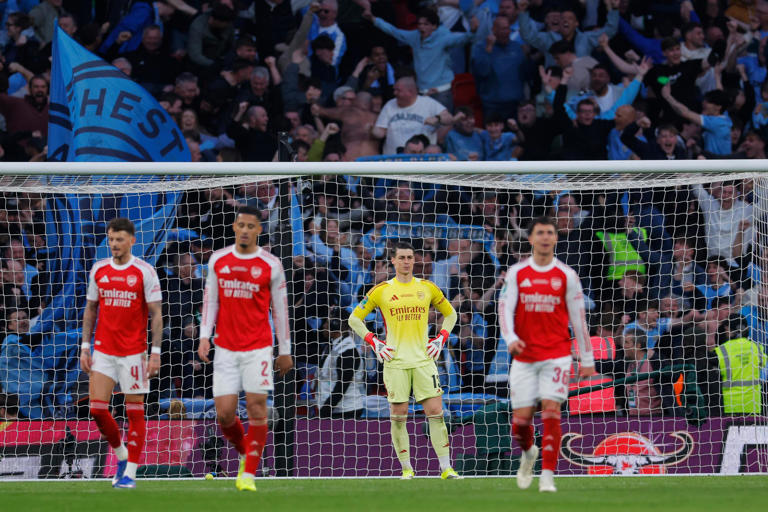
Ultimately, this final feels like it is about far more than the trophy itself. It is a rare meeting of the top two teams in the country at this stage of the competition, and its implications stretch well beyond Wembley. Both sides are chasing bigger ambitions — City still aiming to salvage a domestic treble, and Arsenal pursuing the possibility of an extraordinary quadruple.
All of this elevates the occasion into something much larger. When the match ends, it may not only determine who lifts the cup, but also influence belief, momentum, and the balance of power in English football for the remainder of the season.