

Egypt has accused officials of favouring Argentina after a controversial World Cup defeat. Danchima Media Sports examines the refereeing decisions, VAR incidents, disciplinary statistics and tournament bracket at the centre of the debate.
As defending champions Argentina continue their march toward another FIFA World Cup title, questions surrounding refereeing decisions and tournament fairness have become one of the biggest talking points of the competition.
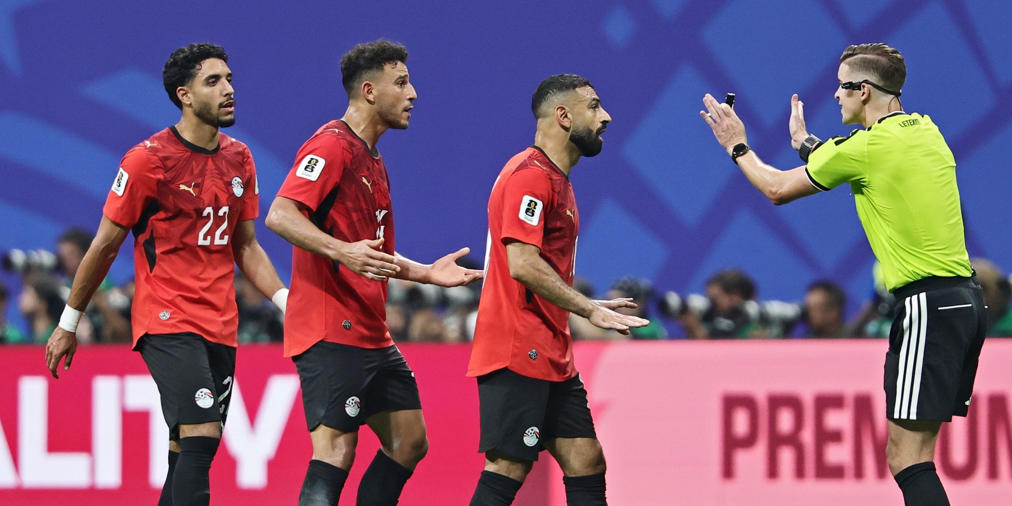
The debate intensified after Argentina survived dramatic 3-2 extra-time victories over both Cape Verde and Egypt, with Egypt’s Football Association formally questioning several refereeing decisions following their Round of 16 defeat.
Egypt Alleges Unfair Treatment
Following their heartbreaking loss, Egypt argued that crucial officiating decisions worked against them.
Head coach Hossam Hassan claimed his team had been treated unfairly, suggesting the officiating favoured the reigning world champions and helped keep Lionel Messi’s World Cup campaign alive.
Egypt pointed to several controversial incidents, including:
- A goal ruled out following a VAR review.
- Two penalty appeals that were not awarded.
- Argentina’s late winning goal, which they believed should not have stood.
However, while the decisions sparked heated debate, there has been no evidence proving any deliberate bias. Refereeing experts note that controversial VAR decisions are common in modern football and do not, on their own, demonstrate preferential treatment.
Questions Over Referee Appointments
Another issue drawing attention is FIFA’s appointment of an all-Argentine officiating team for the quarter-final between France and Morocco.
Although referees are expected to perform independently regardless of nationality, critics argue that assigning Argentine officials to a match involving one of Argentina’s potential rivals creates unnecessary controversy and damages public perception.
Supporters of FIFA’s decision counter that elite referees are selected based on performance and professionalism, not nationality.
Messi Incidents Under the Spotlight
Lionel Messi has also found himself at the centre of discussions after escaping a red card earlier in the tournament for a challenge that some observers compared to an incident that resulted in another player being sent off.
Had Messi been dismissed and suspended, he would have missed several matches in which he scored multiple goals.
The comparison has fuelled speculation among some fans, although no official review has concluded that the decision was incorrect.

Disciplinary Statistics Raise Eyebrows
Statistics have also become part of the debate.
Argentina have committed more fouls than several other leading nations while receiving relatively few yellow cards. The figures have led some analysts to question whether the defending champions have benefited from a more lenient disciplinary approach.
However, disciplinary records alone cannot establish bias, as referees judge every challenge individually based on the circumstances of each incident.
Favourable Tournament Path?
Some football observers have also highlighted Argentina’s route through the knockout stages.
Following changes to the World Cup draw system, several of the tournament favourites were placed in separate sections of the bracket, reducing the likelihood of heavyweight clashes before the semi-finals.
Argentina’s path has included victories over Cape Verde, Egypt and now a quarter-final meeting with Switzerland, while other title contenders have faced higher-ranked opponents much earlier in the competition.
Critics argue this has given the defending champions a comparatively easier route, while tournament organisers maintain the bracket was designed to balance the competition.


No Proof of Conspiracy
Despite the growing discussion across football circles and social media, no credible evidence has emerged showing that FIFA or match officials are deliberately favouring Argentina.
The controversy largely centres on subjective refereeing decisions, statistical trends and tournament scheduling rather than proven misconduct.
As Argentina prepare for the quarter-finals, the focus will remain not only on their pursuit of back-to-back World Cup titles but also on whether the officiating debate continues to dominate headlines.
For now, the allegations remain exactly that—allegations—with no official findings supporting claims of systematic favouritism.


- (no title)
- Everyone Rooted for the Rise. Now They Want the Fall.
- Trump Shuts CNN, Politico and MSNOW Out of the White House
- Vance Backs White House Press Restrictions, Calls Targeted Outlets “Propaganda” Machines
- Spurs, Chelsea and Fulham RELEGATED? Our Shock 2026-27 Premier League Prediction Will Split the Nation