

Fans Across Host Cities Excited for Football, Frustrated by Costs and Politics
As the countdown to the 2026 FIFA World Cup continues, excitement is building across the United States, Canada, and Mexico. However, a growing number of football supporters in host cities say their enthusiasm is being overshadowed by soaring ticket prices, political tensions, and concerns that the tournament is becoming increasingly inaccessible to ordinary fans.
The expanded tournament, which will feature 48 teams and 104 matches across 16 cities, is expected to be the largest World Cup in history. Yet for many supporters, the dream of experiencing football’s biggest spectacle in person is slipping out of reach.
Ticket Prices Leave Fans Feeling Excluded
One of the most common complaints among fans is the cost of attending matches. Supporters from cities including Atlanta, Houston, Los Angeles, Philadelphia, and San Francisco expressed disappointment at what they describe as excessive ticket prices.
Many lifelong football followers say attending even a group-stage match with family members could cost thousands of dollars, making the event inaccessible for average households.
Several fans noted that previous World Cups offered a more affordable experience and fear that FIFA’s focus on revenue generation has transformed the tournament into an event primarily catering to wealthy spectators, corporate guests, and sponsors.
Host Cities Report Mixed Levels of Excitement
While some locations are embracing the arrival of the World Cup, others report surprisingly little buzz.
Toronto and Seattle appear to be among the most enthusiastic host cities. Supporters in both cities expect vibrant fan festivals, packed viewing areas, and strong international participation.
In contrast, residents in cities such as New York, Boston, Philadelphia, and San Francisco say public interest remains relatively muted despite the tournament being only weeks away.
Many fans believe high prices have reduced local excitement because large numbers of residents feel excluded from attending matches.

Political Tensions Cast a Shadow
Beyond football, global and domestic political issues are also influencing perceptions of the tournament.
Several supporters expressed concerns about immigration policies, international conflicts, travel restrictions, and the increasing overlap between politics and sport.
Some Mexican fans questioned whether their country has been treated as an equal partner in the hosting arrangement, arguing that the United States has received the majority of the economic and promotional benefits associated with the tournament.
Others voiced frustration over FIFA’s leadership and decision-making, claiming the organization has become too focused on commercial interests at the expense of supporters.
Infrastructure Concerns Remain
Transportation and infrastructure readiness are another major concern.
Fans in Boston, Houston, Kansas City, and Mexico City warned that traffic congestion, limited public transportation options, and logistical challenges could affect the overall tournament experience.
Some residents believe the World Cup represented a missed opportunity for long-term infrastructure investments that would continue benefiting communities long after the final whistle.
Hope Still Remains for a Memorable Tournament
Despite the criticism, many supporters remain optimistic that the World Cup will ultimately deliver unforgettable moments.
Fans across all three host nations expressed hopes for exciting football, cultural exchange, and positive interactions between visitors and local communities.
Many believe that once the opening matches begin, the focus will shift from politics and ticket prices to the action on the pitch.
For football supporters around the world, the World Cup remains the sport’s grandest stage. The challenge for FIFA and local organizers will be ensuring that the tournament feels like a celebration for fans rather than an exclusive event reserved for those who can afford the rising costs.
As World Cup 2026 approaches, anticipation and frustration appear to be growing side by side. Whether the tournament is ultimately remembered as a historic success or a missed opportunity may depend on how well organizers respond to the concerns of the very supporters who make football the world’s most beloved sport.

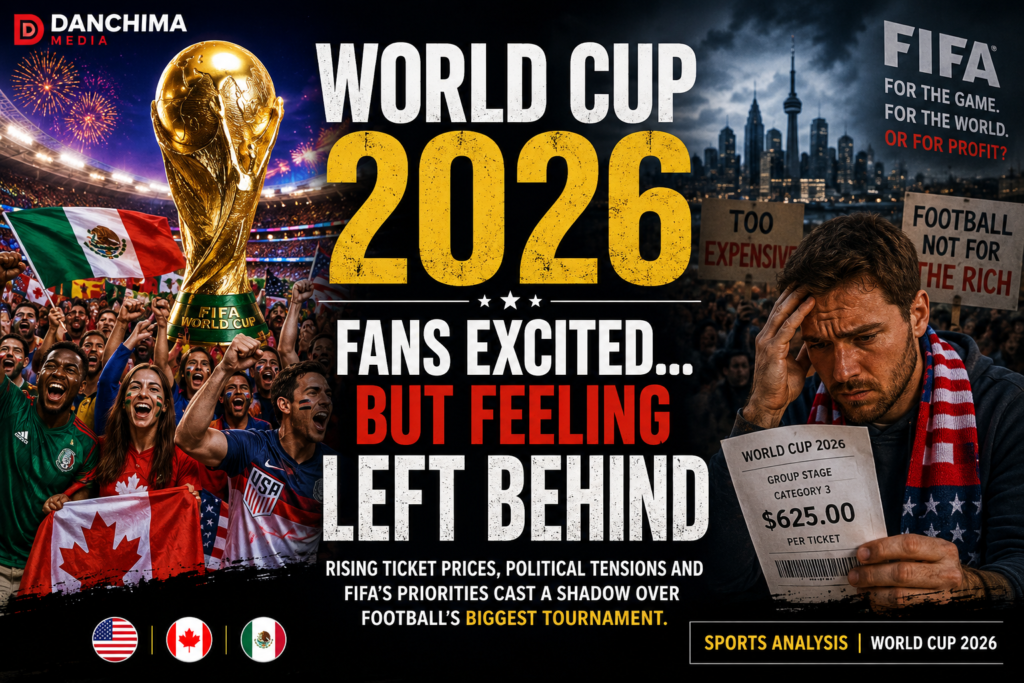
Fans across World Cup 2026 host cities in the USA, Canada and Mexico express excitement for the tournament but raise concerns over ticket prices, FIFA policies, politics and infrastructure.
The World Cup without the fans is not truly a World Cup at all.” — Danchima Media