


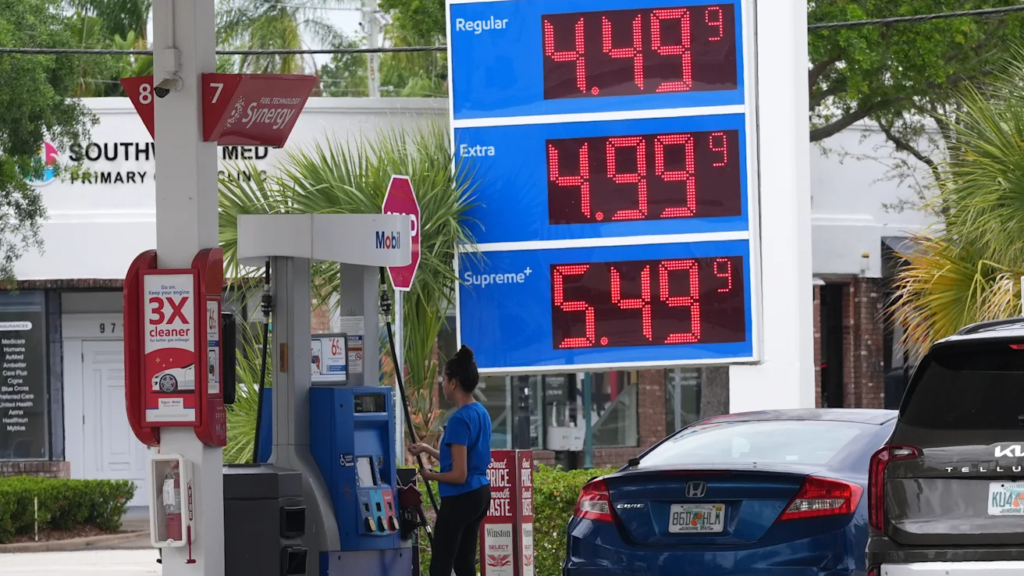
U.S. consumer prices rose sharply in March, recording the largest monthly increase since 2022, as escalating conflict involving Iran sent global energy prices soaring and pushed gasoline costs above $4 per gallon.
Fresh data released Friday by the Labor Department showed that the Consumer Price Index (CPI) climbed 0.9% from February and was 3.3% higher than a year earlier. While the annual figure came in slightly below economists’ forecast of 3.4%, the monthly surge matched expectations and marked a significant acceleration in inflationary pressure.
The sharp rise was driven primarily by energy prices following disruptions linked to the conflict in the Middle East, particularly around the Strait of Hormuz, one of the world’s most critical oil transit routes.
According to the report, the gasoline index surged 21.2% in March, accounting for nearly three-quarters of the overall monthly increase in consumer prices. The Labor Department described it as the largest single-month jump in gasoline prices since records began in 1967.
Economists say the closure and instability around the Strait of Hormuz significantly reduced oil flows, triggering a rapid spike in crude prices and causing fuel costs across the United States to rise sharply.
“We’re currently experiencing what can best be described as a whiplash economy,” economists noted, as households continue to feel the impact of sudden price swings driven by global events.
The conflict’s inflationary impact is also spreading beyond fuel.


Airfare prices rose 2.7% in March, reflecting increased airline operating costs as jet fuel prices climbed. Meanwhile, food prices remained broadly unchanged, although several categories showed uneven movement. Tomato prices jumped sharply during the month, while processed meat products such as hot dogs recorded a decline.
Despite the headline surge, the underlying inflation trend appeared somewhat more moderate.
The core CPI, which excludes volatile food and energy prices, rose 0.2% on a monthly basis and 2.6% year-over-year, both slightly below analyst expectations. This suggests that much of the current inflation spike remains concentrated in energy-related sectors rather than reflecting broad-based price increases across the economy.
However, analysts warn that March’s figures may represent only the initial effects of the conflict, with additional pressure likely to emerge in the coming months if oil prices remain elevated.
Market observers believe transportation costs, shipping expenses, and logistics-driven price increases could soon feed into consumer goods, travel, and broader services.
Some economists estimate that sustained higher crude oil prices could add another 0.5 to 0.6 percentage points to inflation in upcoming reports.
The inflation outlook also presents a fresh challenge for the Federal Reserve, which has been attempting to steer inflation back toward its 2% target without slowing economic growth too aggressively.
With energy prices rising and inflation risks mounting once again, expectations for future interest rate cuts may now be pushed further into the year.
For households and businesses alike, March’s report serves as a reminder that geopolitical instability can rapidly reverse recent progress in cooling inflation.
As the conflict continues, markets and policymakers will be closely watching whether rising energy costs begin to spread more deeply across the wider economy.