


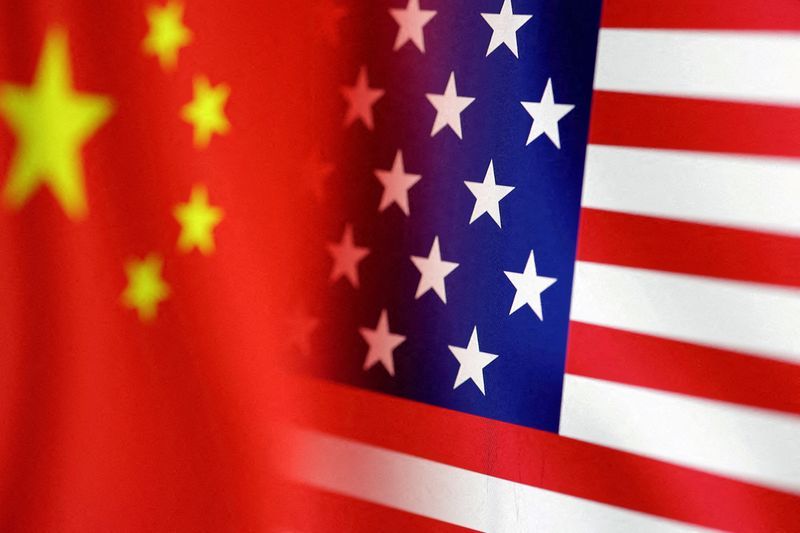
The recent rollout of tariffs by former President Donald Trump has marked a dramatic shift from his first-term trade policies, signaling a more aggressive and unpredictable stance on international trade.
A Fast-Paced and Broader Strategy
Unlike the gradual and calculated measures of his initial presidency, Trump has swiftly imposed tariffs on major trading partners, including China, with the promise of further duties to follow. Over the weekend, historic duties were announced, only for Trump to pivot again on Monday by temporarily pausing tariffs on Canada and Mexico.
As of Tuesday morning, a 10% tariff on Chinese imports has taken effect, prompting immediate retaliation from China. Meanwhile, duties on Canada and Mexico have been deferred for a month while negotiations continue.
The international response has also intensified, with China threatening to leverage investigations into major tech companies like Google and Nvidia as a bargaining tool.
Trump’s Evolving Tariff Strategy
This second-term approach differs from Trump’s first-term tactics. Previously, Trump took a more gradual path, initiating talks with China in early 2017 and only imposing major tariffs in 2018. This time, however, the duties were introduced first, with negotiations to follow.
Speaking to reporters, Trump described the initial 10% tariff on Chinese imports as the “first salvo” in negotiations. Whether these duties will remain in place is uncertain, but their immediate impact on consumer goods prices is already evident.
Marc Busch, a former adviser on trade issues, noted the unprecedented nature of Trump’s new strategy, emphasizing that it leaves little room to avoid impacting consumer goods.
“If you’re going to go big, you can’t dodge the impact on final consumer goods,” Busch said.
Economic Ramifications and Consumer Impact
Economists are already assessing the potential consequences. The Tax Foundation estimates that the new tariffs on China alone could reduce the US economy by 0.1% in 2025 if they remain in place.
During Trump’s first term, the focus was primarily on industrial inputs, which had an indirect impact on consumers. Now, the emphasis has shifted directly to a broader range of consumer goods.
Tariffs as a Negotiation Tool
Trump’s remarks on Monday underscored his belief in the power of tariffs as both an economic lever and a negotiating tool.
“Tariffs are very powerful both economically and for getting everything else you want,” he stated.
Experts predict that tariff threats will be a recurring theme throughout Trump’s second term. Early moves targeting Canada and the subsequent 30-day reprieve highlight the administration’s aggressive stance.
“No one is safe, and Trump wants everyone deal-making,” Busch observed, signaling the president’s message to international trading partners.
Global Preparedness and Retaliation
One significant difference from Trump’s first trade war is the global preparedness for US tariffs. Douglas Holtz-Eakin, president of the American Action Forum, noted that other countries are now better equipped to retaliate.
“They have been planning their responses to inflict maximum damage on the US while minimizing harm to their own economies,” Holtz-Eakin explained.
China has already implemented retaliatory measures, and both Canada and Mexico are reportedly exploring new strategies, including “carousel retaliation,” which would periodically rotate the US products targeted for tariffs.
Uncertainty and Legal Complexities
Trump’s rapid implementation of tariffs and use of novel legal authority have left many questions unanswered. Greta Peisch, a former trade official, highlighted the lack of clarity around how these tariffs apply.
“There are a lot of technical questions without answers,” she noted, predicting that economic effects will be felt quickly.
As legal, political, and market pushback takes shape, the sustainability of Trump’s 2.0 approach to tariffs will be closely scrutinized in the coming months.


-
Nigeria’s Air Peace Spreads Its Wings to London – A Milestone in African Aviation.
Spread the loveIn a monumental stride for African aviation, Nigeria’s leading airline, Air Peace, has announced its inaugural flights to London, United Kingdom. This historic development marks a significant turning point in the continent’s air travel industry, bolstering connectivity and fostering economic growth between Nigeria and the UK. Bridging Continents: Air Peace’s London Expansion Air…
-
Salah’s Holiday Controversy: Christmas Tree Sparks Debate Amidst Plea for Global Peace.
Spread the loveEach festive season, Mohamed Salah manages to ignite a holiday controversy, and this year is no exception. Just like in 2020, 2021, and 2022, the Liverpool striker’s Instagram post has once again stirred emotions among his Muslim followers in 2023. As in previous years, Salah finds himself under scrutiny for partaking in Christmas…
-
Putin threatens Finland over NATO membership
Spread the loveIn a recent episode of the Moscow Kremlin Putin program, Russian President Vladimir Putin escalated tensions by issuing threats against Finland following its NATO membership. Putin, historically acknowledging the amicable relations with Finland, expressed discontent over its NATO alignment and hinted at deploying troops to the Finnish border. “Finland’s inclusion in NATO creates…
-
Unveiling Austria’s Corporate Sleuths: Private Eyes on Sick Leave
Spread the loveIn the picturesque landscapes of Austria, where tradition and modernity intersect, a unique and somewhat controversial practice is gaining traction among employers. Forget the conventional sick leave policies; Austrian businesses are turning to an unexpected ally to ensure their workforce stays true to their recuperative downtime – private detectives. In a country where…
-
Arsenal sells 80 million flop to Turkey
Spread the loveArsenal FC has now managed to sell Nicolas Pepe after all. The striker, who joined the north Londoners in 2019 for 80 million euros, is moving to Turkish top-flight club Trabzonspor, according to transfer expert Fabrizio Romano. According to the report, the Ivorian had already completed the medical check on Friday morning, and…
-
Manchester City Chase Redemption as Chelsea Eye FA Cup Glory
Spread the loveThe stage is set for another blockbuster showdown at Wembley Stadium as Manchester City prepare to face Chelsea FC in the 2026 FA Cup final on Saturday. For the fourth consecutive season, City will walk onto the famous Wembley turf in search of English football’s oldest domestic trophy. After painful final defeats to…
-
Trump’s China Visit Delivers Optics, Warm Words and Unfinished Deals
Trump’s latest visit to China delivered grand ceremonies, warm exchanges with President Xi Jinping and promises of major trade opportunities, but few concrete agreements emerged from the high-profile meetings in Beijing. While both sides projected optimism and stability, unresolved tensions over Taiwan, trade and global influence continue to cast uncertainty over the future of U.S.-China…
-
Premier League Unveils Eight-Man Shortlist for 2025/26 EA SPORTS Player of the Season Award
Spread the love The race for the prestigious 2025/26 EA SPORTS Player of the Season award in the Premier League has officially begun, with eight standout performers nominated after delivering exceptional campaigns for their respective clubs. Fans across the world now have the opportunity to vote for the player they believe made the biggest impact…
-
FG Opens ₦600bn Bond Offer to Boost Local Investment, Fund Budget Needs
Nigeria’s Federal Government has launched a fresh ₦600 billion FGN bond auction through the Debt Management Office to attract domestic investors, finance budget obligations, and strengthen the local debt market amid rising fiscal pressures.
-
Fidelity Bank Posts 45% Earnings Growth, Shareholders’ Funds Cross N1 Trillion
Spread the love Fidelity Bank Plc has reported a strong financial performance for the 2025 financial year, with gross earnings rising by 45 percent to N1.5 trillion, up from N1.04 trillion recorded in 2024. According to the bank’s audited financial statements for the year ended December 31, 2025, the lender also achieved a major milestone…
-
Deadly Hantavirus Outbreak on Cruise Ship Sparks Global Health Response
Spread the loveInternational health authorities are closely monitoring a deadly hantavirus outbreak linked to the cruise ship MV Hondius after multiple infections and three reported deaths triggered a large-scale international evacuation and quarantine operation. The latest development came after the final group of passengers and crew members evacuated from the vessel safely arrived in the…
-
How to Earn Money Online?
Spread the love🌐 How to Earn Money Online? “Where can I start to earn money?” — many have asked themselves this question. The modern world offers excellent opportunities for increasing income. Earning online has become easier thanks to the development of information technology and the emergence of new online platforms. Let’s consider a few simple…
-
AI Is Becoming a Default Tool for the Next Generation
Spread the loveThere’s been a lot of noise around artificial intelligence lately—especially when it comes to young people. Warnings, fears, and predictions about what could go wrong often dominate the conversation. But if you look at how teenagers are actually using AI, a different picture starts to emerge. For many of them, tools like ChatGPT…
-
The Quiet Strength of Walking Through Midlife Alone
Spread the loveThere’s a story society loves to tell about people who reach their 40s and 50s without a partner. It’s a familiar script—one that quietly labels them as lonely, incomplete, or somehow left behind. But that version of the story misses something important. Completely. Because when you look closer—really look—you begin to notice something…
-
Erling Haaland’s winning goal, the explosion of noise, the reaction at full-time.
Spread the loveSunday’s result at the Etihad Stadium felt like the moment when the momentum of the Premier League title race had fully swung Manchester City‘s way following their monumental 2-1 victory over leaders Arsenal. Mikel Arteta’s men still remain at the summit but are now clinging on to their position after seeing a nine-point lead chopped…