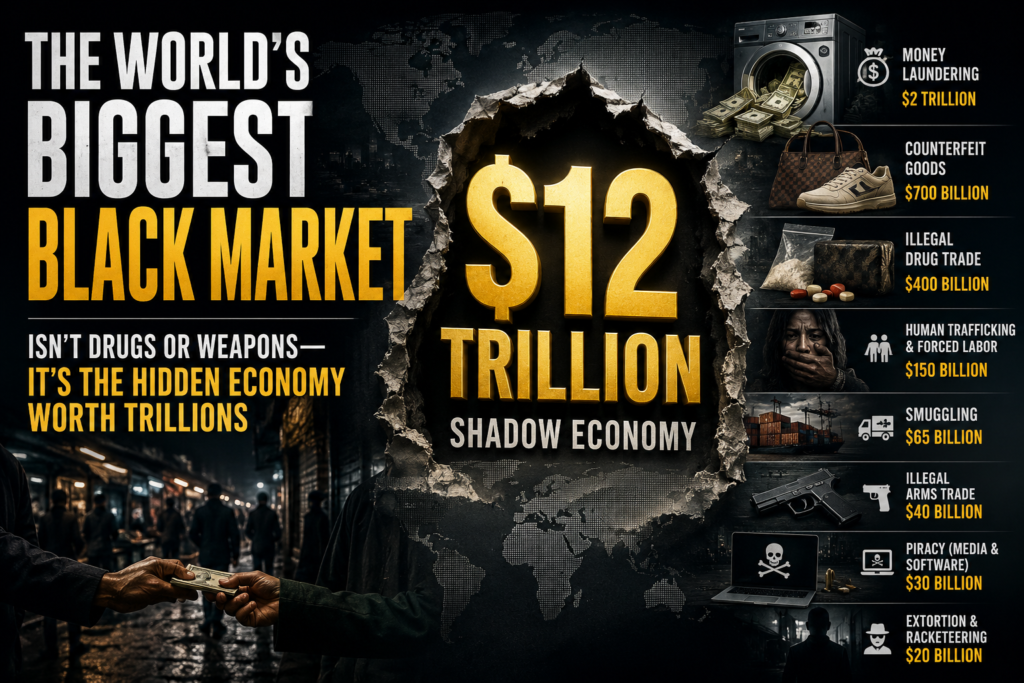
When most people hear the phrase “black market,” they picture drug cartels, arms dealers, counterfeit luxury goods, or criminal syndicates operating in the shadows. The reality is far more uncomfortable. The largest underground market in the world is not built on cocaine shipments or illegal weapons. It is the vast global shadow economy—a hidden network of unreported business activity, off-the-books employment, cash transactions, tax evasion, and informal trade that touches nearly every country on Earth.


Recent economic analyses estimate that the global shadow economy represents roughly 11.8 percent of world economic output, amounting to approximately $12 trillion to $13 trillion annually. If it were a nation, it would rank among the world’s largest economies, rivaling the economic output of major global powers.
This reality forces us to rethink what we mean by “illegal” economic activity. The greatest challenge to transparency and accountability may not come from criminal empires hiding in remote locations. It may come from millions of everyday transactions occurring in plain sight.

The Economy Beneath the Economy
The shadow economy is often misunderstood. It includes everything from unregistered businesses and undeclared income to workers paid in cash without official records. In many developing countries, informal economic activity provides livelihoods for millions who would otherwise struggle to survive. In wealthier nations, however, the shadow economy often manifests through tax evasion, hidden earnings, and regulatory avoidance.

Not every participant in the shadow economy is a criminal. A street vendor operating without formal registration is very different from an international money laundering network. Yet both exist outside official reporting systems, making the true scale of economic activity difficult for governments to measure.
The consequences are enormous. Governments lose billions in tax revenue, public services become harder to fund, and honest businesses face unfair competition from those operating outside the rules.

The Machinery of Dirty Money
Closely connected to the shadow economy is money laundering, often estimated to involve trillions of dollars globally every year.
Money laundering serves as the bridge between criminal profits and the legitimate financial system. Drug trafficking proceeds, corruption funds, fraud revenues, cybercrime profits, and other illicit gains are funneled through shell companies, offshore accounts, complex financial structures, and seemingly legitimate businesses until their origins become difficult to trace.

Without money laundering, many criminal enterprises would struggle to survive. Criminals do not merely want money; they want money they can safely spend.
This is why financial transparency remains one of the most important battlegrounds in the fight against organized crime.

Counterfeits: The Hidden Cost of Cheap Goods
Among the world’s largest illicit markets, counterfeit products continue to rank near the top.
The trade in fake goods has evolved far beyond imitation handbags and luxury watches. Counterfeit pharmaceuticals, electronics, automotive parts, cosmetics, and household products now circulate through global supply chains, creating both economic and public safety risks. The OECD estimates that international trade in counterfeit and pirated goods remains a major global challenge affecting legitimate businesses and governments worldwide.
Consumers seeking bargains may unknowingly support criminal networks while exposing themselves to potentially dangerous products.

Human Trafficking: The Most Profitable Exploitation
While discussions about illicit markets often focus on money, some black markets derive their profits directly from human suffering.
Human trafficking and forced labor generate hundreds of billions of dollars globally each year. Millions of people remain trapped in situations involving forced labor, sexual exploitation, debt bondage, and modern slavery. The financial rewards for traffickers are immense, but the human cost is immeasurable.
Unlike counterfeit products or smuggled goods, the commodity in this market is human freedom itself.
This remains one of the greatest moral failures of the modern global economy.

Why the Shadow Economy Matters
The existence of underground markets is not simply a law-enforcement issue. It is an economic issue, a governance issue, and ultimately a trust issue.
When large portions of economic activity occur outside official systems, governments struggle to collect revenue, enforce regulations, protect workers, and maintain fair competition. Legitimate businesses are placed at a disadvantage, while criminal organizations gain opportunities to expand their influence. The OECD warns that illicit trade undermines public safety, weakens institutions, and erodes the rule of law.

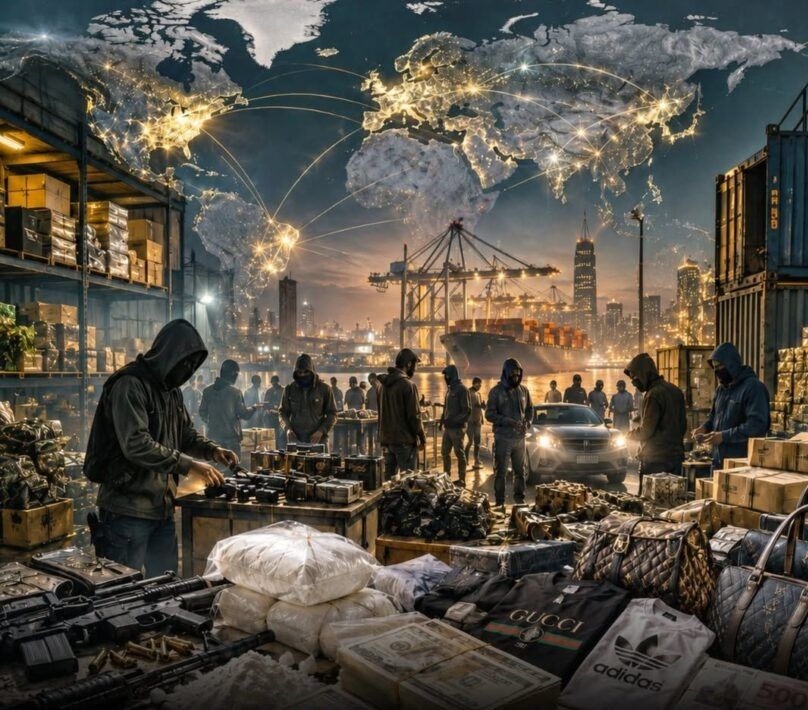
At the same time, policymakers must recognize that not all informal economic activity stems from criminal intent. In many parts of the world, excessive bureaucracy, weak institutions, and limited economic opportunities push people into the informal sector simply to survive.
The challenge is therefore not merely enforcement. It is creating economic systems that are accessible, transparent, and inclusive enough that people choose participation over avoidance.
The biggest lesson from the world’s underground economy is not that crime is profitable. We have known that for centuries. The real lesson is that economic invisibility has become one of the defining features of modern globalization.

Whether it is hidden income, counterfeit goods, cybercrime profits, money laundering, or forced labor, trillions of dollars move through channels that escape public oversight every year.
The question facing governments, businesses, and citizens is not whether these markets exist. They clearly do.
But the question is whether the institutions of the 21st century are capable of keeping pace with an economy where the line between the visible and the invisible grows increasingly blurred. And if they cannot, the world’s largest economy may continue to be the one that officially does not exist.