


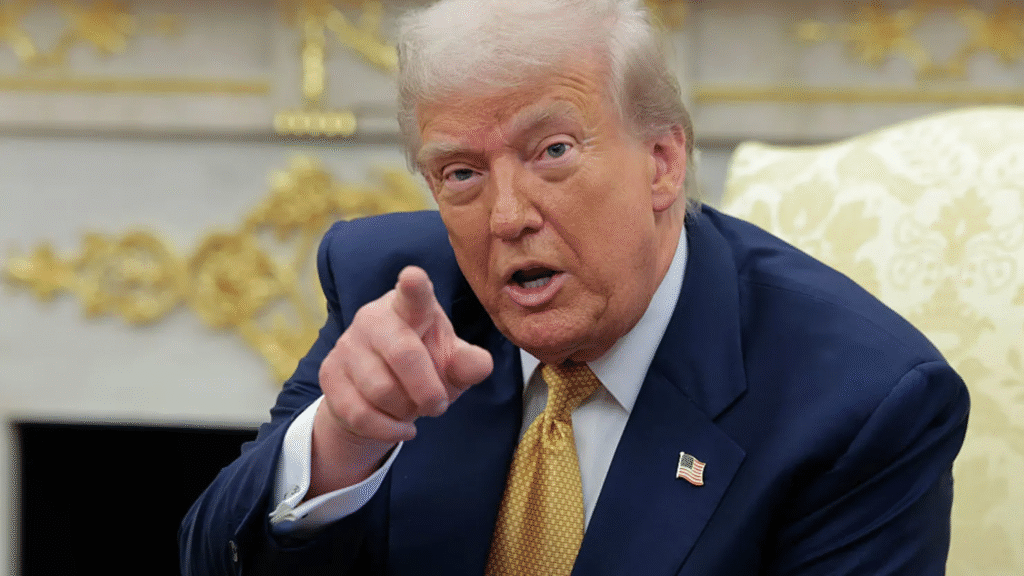
Come Friday, August 1, the global economy enters a new phase of uncertainty as President Donald Trump’s deadline for trade negotiations arrives. Countries that have failed to reach an agreement with the U.S. are bracing for steep new tariffs, while those that have signed deals are navigating the terms and potential fallout.
The evolving tariff landscape has created a patchwork of deals, suspensions, and retaliatory threats, marking the latest chapter in Trump’s aggressive “America First” trade strategy.
✅ Countries That Secured a Deal
🇬🇧 United Kingdom: First Through the Gate
The U.K. was the first to ink a deal, finalizing terms in May. Under the framework:
- A 10% baseline tariff will apply to U.K. goods.
- Quotas and exemptions were included for sectors like aerospace and automotive.
- Some sticking points remain — particularly over steel, aluminum, and the U.K.’s digital services tax, which the U.S. wants scrapped.
Despite high-level talks between Trump and Prime Minister Keir Starmer, uncertainty lingers over the final shape of the agreement.
🇻🇳 Vietnam: A Surprise Deal with Stiff Terms
Vietnam’s tariffs dropped from 46% to 20%, but the deal came with complications:
- A 40% transshipment tariff will be imposed on goods rerouted through Vietnam — a measure aimed at halting Chinese trade circumvention.
- Hanoi reportedly expected a lower rate of 11%, according to Politico.
Trump unilaterally declared the final rate, catching Vietnamese negotiators off guard.
🇮🇩 Indonesia: Significant Trade Openings
Indonesia negotiated a tariff cut from 32% to 19% and agreed to:
- Eliminate 99% of tariffs on U.S. exports.
- Work with the U.S. to dismantle non-tariff barriers in agriculture and energy.
This deal is seen as a big win for U.S. exporters seeking market access in Southeast Asia.
🇵🇭 Philippines: A Modest Adjustment
Tariffs were reduced by just 1 percentage point, from 20% to 19%.
- Trump touted the Philippines’ move to eliminate tariffs on U.S. goods entirely.
- He also referenced enhanced military cooperation, though details were not disclosed.
🇯🇵 Japan: Major Investment, Major Claims
Japan secured a deal that:
- Cuts tariffs from 25% to 15%.
- Grants preferential treatment to its auto exports.
- Includes a promised $550 billion investment in the U.S., with Trump claiming “90% of the profits” will go to Americans.
Despite earlier tensions, Japan’s agreement stands out for its economic scale — and political theatrics.
🇪🇺 European Union: A Fraught Compromise
After protracted negotiations, the EU agreed to:
- A 15% baseline tariff (down from the 30% threat).
- Reduced tariffs on autos, aircraft, and pharmaceuticals.
Still, European leaders remain split. French PM Francois Bayrou called the deal “a dark day,” while the EU Trade Commissioner said it was the best outcome possible under pressure.
🇰🇷 South Korea: Investment-Heavy Deal
South Korea’s deal mirrors Japan’s:
- 15% across-the-board tariff.
- Promised $350 billion in U.S.-controlled investments.
President Lee Jae Myung emphasized that the deal enables Korean firms to expand into U.S. industries like semiconductors and shipbuilding.
❌ Countries Still Without a Deal
🇮🇳 India: Tariffs and a Penalty
India faces a 25% tariff, plus an unspecified penalty for trade practices and defense deals with Russia. Though slightly lower than April’s 26% rate, the move reflects Trump’s long-standing frustration with India’s high import barriers.
🇨🇦 Canada: High Stakes, No Settlement
Canada is bracing for 35% tariffs beginning August 1. The situation remains tense:
- Trump has blamed Canadian drug exports for fueling U.S. inflation.
- PM Mark Carney called the talks “intense” and suggested a no-tariff outcome is unlikely.
🇲🇽 Mexico: Border Politics Drive Trade
Mexico, once part of NAFTA, now finds itself on the wrong side of Trump’s tariff wall. A 30% tariff is set to take effect unless a deal is reached — though there has been little progress.
Trump has linked the tariffs to border security, complicating the path to resolution.
🇦🇺 Australia: Quietly in the Crosshairs
Australia currently faces the original 10% baseline tariff, thanks to its trade deficit with the U.S. But with Trump now floating a 15–20% global baseline, Canberra could be swept up in the next wave unless an exemption is negotiated.
The Australian government has not publicly engaged in talks, though it recently loosened restrictions on U.S. beef imports.
🇨🇳 China: No Deal, Just a Fragile Truce
China remains in limbo, embroiled in a prolonged tit-for-tat tariff war:
- Tariffs spiked to 145% on Chinese goods and 125% on U.S. exports earlier this year.
- A temporary truce in May brought rates down to 30% for China and 10% for the U.S.
- The truce expires August 12, and the most recent talks in Stockholm ended without progress.
Further escalation seems likely unless Trump personally approves another extension.
📊 What’s Next?
For nations without a deal by August 1, a new global baseline tariff of 15–20% looms — higher than the initial 10% proposed on “Liberation Day.” Trump has warned that countries with trade surpluses will face even higher “reciprocal tariffs.”
Trump’s tariff blitz is reshaping global trade relationships. While some countries have scrambled to sign last-minute deals, others are holding out — unwilling or unable to meet the White House’s demands.
But as new tariffs take effect, the costs will be felt by businesses, consumers, and supply chains worldwide. Whether this is a new era of protectionism or a bargaining chip in a larger geopolitical game remains to be seen.
One thing is certain: August 1 isn’t just a deadline — it’s a turning point.
📬 Stay informed. Subscribe to Danchima Media for the latest in global trade, politics, and economic policy.