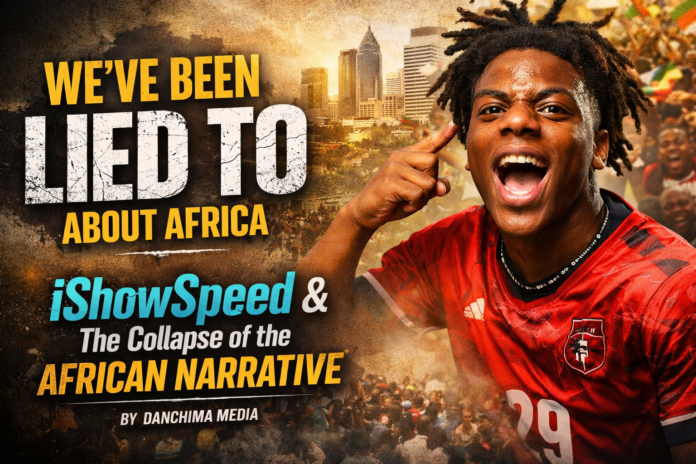

For decades, Africa has been framed through a narrow and damaging lens. To much of the world—especially in the West—the continent has been reduced to images of poverty, conflict, and stagnation. It is a narrative shaped by selective media coverage, outdated documentaries, and inherited colonial assumptions.
Then, unexpectedly, a 19-year-old American streamer disrupted it.
When YouTube star IShowSpeed embarked on a livestreamed tour across several African countries, he didn’t arrive as a journalist, historian, or activist. He came as himself—unfiltered, unscripted, and visibly curious. What followed was not just a viral moment, but a real-time collapse of a long-standing global narrative.
A Reality Few Were Prepared to See
As Speed streamed from African cities, millions of viewers watched in disbelief. Not because Africa looked unfamiliar—but because it contradicted everything they had been taught to expect.
They saw modern infrastructure, vibrant street life, internet connectivity, music, fashion, laughter, and hospitality. They saw crowds welcoming Speed not as a spectacle, but as family. And most importantly, they saw a continent that looked alive, complex, and contemporary.
The dominant reaction online was not admiration—it was shock.
A recurring sentiment echoed across comment sections and reaction videos:
“We’ve been lied to.”
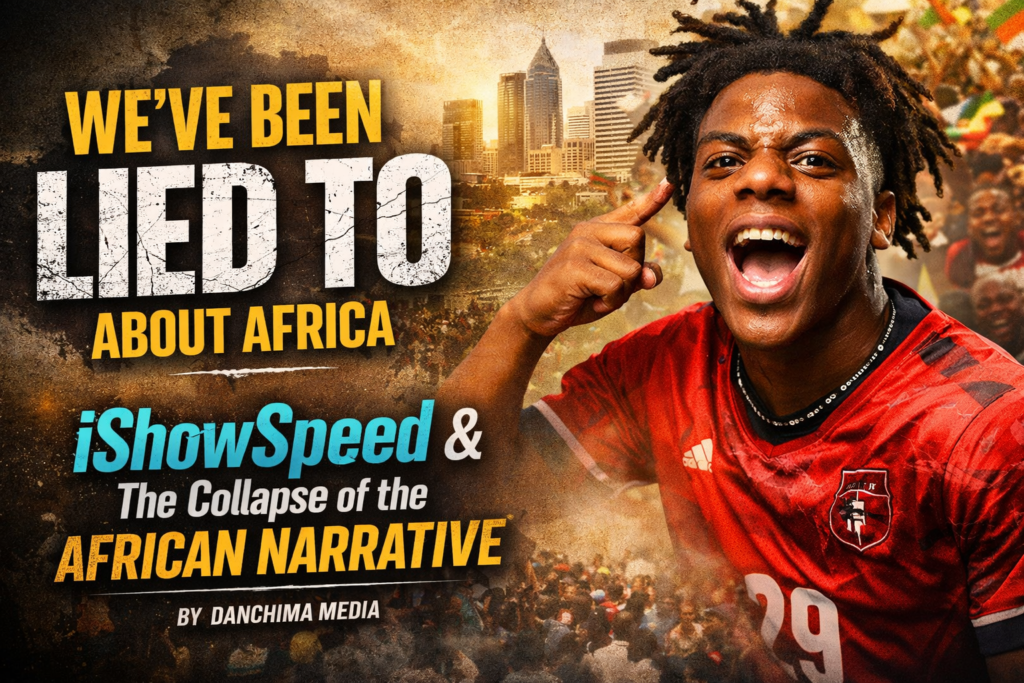
Contrast That Exposed the Lie
Earlier in his travels, Speed had toured parts of Europe, where he was met with open racism—monkey chants, banana-throwing, and hostility disguised as humor. The contrast was stark.
In Africa, the experience was the opposite. He was protected, celebrated, respected, and embraced. Not as a novelty, but as a brother.
That contrast forced uncomfortable questions: If Africa is “uncivilized,” why did it feel more humane?
If Europe is “developed,” why did it feel more hostile?
The Power of Unmediated Storytelling
What made Speed’s tour so powerful was not intention, but absence of mediation.
There were no institutional filters.
No political framing.
No expert commentary.
Just a peer sharing lived experience in real time.
This is where mainstream media failed—and why a streamer succeeded.
If these images had come from a tourism board, they would have been dismissed as propaganda.
If they came from a documentary, they would have been debated.
If they came from academia, they would have been ignored.
But they came from someone young people trust—because he feels like one of them.
Africa Is Not a Country
One of the most glaring misconceptions exposed by this moment is the idea of Africa as a single place. Africa is a continent of 54 countries, each with distinct cultures, histories, economies, and realities.
Speed’s experience does not represent every African experience. Poverty exists. Conflict exists. Inequality exists—just as it does in the United States, Europe, and elsewhere.
But suffering is not Africa’s defining feature. Complexity is.
An Emotional Awakening, Not a Debate
This was not a policy discussion or an academic correction. It was an emotional awakening.
People do not change deeply held beliefs through statistics.
They change them through emotional proximity.
Speed didn’t argue.
He didn’t explain.
He simply reacted—with joy, curiosity, and wonder.
And those reactions persuaded millions more effectively than decades of lectures ever could.
A Shift in Global Influence
This moment signals something larger:
the decline of institutional narrative control.
Today, YouTube and livestreaming shape perception more powerfully than traditional media. Trust has shifted from institutions to individuals. From experts to peers. From scripts to experiences.
A teenager with a phone accomplished what global media networks failed to do over generations—by simply showing reality.
Reconnection Begins in the Mind
For many in the African diaspora, this moment carried deeper meaning. The lie was not only told about Africa—it was told to people of African descent worldwide. Separation was framed as rejection. Distance was framed as disinterest.
Speed’s journey quietly corrected that distortion.
Africa is not frozen in the past.
It is not waiting to be discovered.
It is living, evolving, imperfect, welcoming, and proud.
And when false filters fall away, truth moves freely.
Danchima Media
Challenging narratives. Restoring context. Telling the stories that matter.






**nerve calm**
NerveCalm is a high-quality nutritional supplement crafted to promote nerve wellness, ease chronic discomfort, and boost everyday vitality.
**prodentim**
ProDentim is a distinctive oral-care formula that pairs targeted probiotics with plant-based ingredients to encourage strong teeth, comfortable gums, and reliably fresh breath.
**neurosharp**
Neuro Sharp is a modern brain-support supplement created to help you think clearly, stay focused, and feel mentally confident throughout the day.
**boostaro official**
Boostaro is a purpose-built wellness formula created for men who want to strengthen vitality, confidence, and everyday performance.
**neuro sharp**
Neuro Sharp is an advanced cognitive support formula designed to help you stay mentally sharp, focused, and confident throughout your day.
**prostafense official**
ProstAfense is a premium, doctor-crafted supplement formulated to maintain optimal prostate function, enhance urinary performance, and support overall male wellness.
**men balance pro**
MEN Balance Pro is a high-quality dietary supplement developed with research-informed support to help men maintain healthy prostate function.
**herpafend reviews**
Herpafend is a natural wellness formula developed for individuals experiencing symptoms related to the herpes simplex virus. It is designed to help reduce the intensity and frequency of flare-ups while supporting the bodys immune defenses.
**prodentim official website**
ProDentim is a distinctive oral-care formula that pairs targeted probiotics with plant-based ingredients to encourage strong teeth, comfortable gums, and reliably fresh breath
**mounja boost**
MounjaBoost is a next-generation, plant-based supplement created to support metabolic activity, encourage natural fat utilization, and elevate daily energywithout extreme dieting or exhausting workout routines.
**aquasculpt**
aquasculpt is a premium metabolism-support supplement thoughtfully developed to help promote efficient fat utilization and steadier daily energy.