


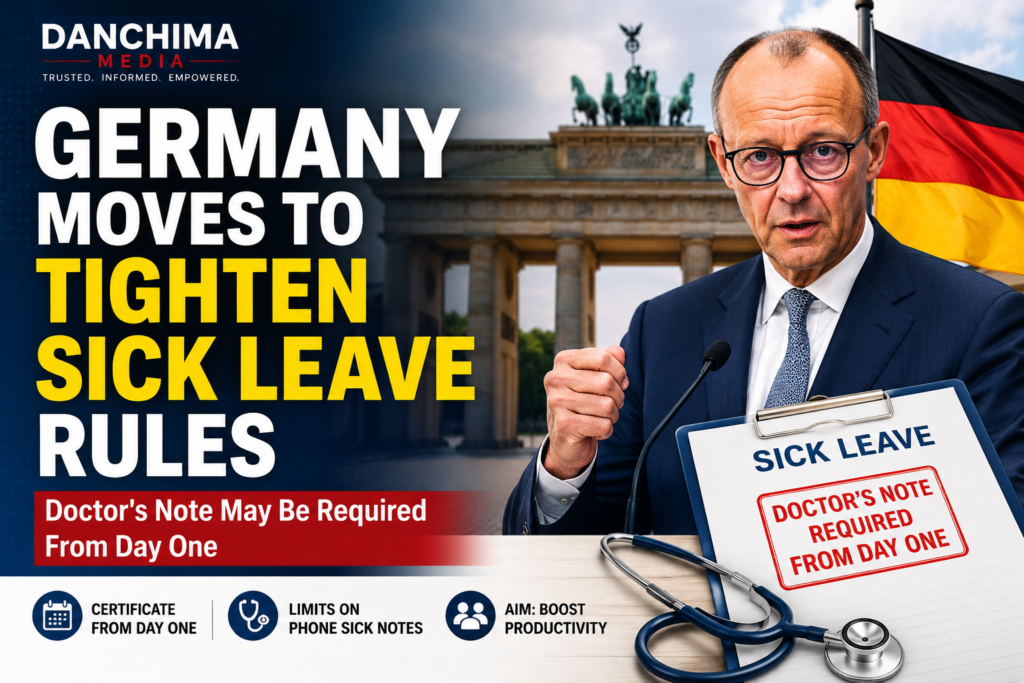
Germany’s government has announced plans to introduce stricter sick leave regulations as part of an ambitious economic reform package aimed at boosting productivity and strengthening the country’s long-term competitiveness.
Chancellor Friedrich Merz revealed that the proposed changes would allow employers to require employees to present a doctor’s certificate from the very first day they call in sick. The reform would also end the widespread practice of obtaining extended sick leave through a simple telephone consultation with a physician.
Speaking during the launch of a package containing 34 economic reform measures, Merz said Germany could no longer afford the country’s high levels of workplace absenteeism.
“We are abolishing sick leave by phone and introducing the requirement for a medical certificate from the first day of illness,” the Chancellor said, arguing that excessive absences have become a disadvantage for German businesses competing in the global economy.
A Shift From Current Practice
Under existing rules, many employees are allowed to remain off work for several days before being required to submit medical documentation, while telephone consultations have enabled some workers to receive sick notes without visiting a doctor’s office in person.
The proposed reforms would significantly tighten those procedures, making it easier for employers to request immediate medical verification of an employee’s illness.
However, the measures have not yet become law. They must first pass through Germany’s legislative process before taking effect.
Why the Government Wants the Changes
The Merz administration says the reforms are necessary to improve Germany’s economic performance after years of sluggish growth.
Europe’s largest economy continues to face several challenges, including rising energy costs, demographic pressures from an aging population, increasing international competition, and the lingering economic effects of the COVID-19 pandemic and geopolitical conflicts.
According to the government, reducing unnecessary absenteeism is one step toward improving productivity and restoring Germany’s competitiveness.
More Than Just Sick Leave
The proposed changes are part of a broader economic strategy that includes tax relief for low- and middle-income families, pension reforms linked to life expectancy, and efforts to reduce bureaucracy for businesses and citizens.
Officials believe these measures will encourage investment, increase workforce participation, and support sustainable economic growth over the coming years.


Debate Expected
The proposed sick leave reforms are expected to generate strong reactions across Germany.
Business groups are likely to welcome stricter verification requirements as a way to reduce abuse of the sick leave system and improve workplace productivity.
On the other hand, labor unions and employee advocates have expressed concerns that the new rules could place additional pressure on genuinely ill workers, forcing them to seek medical appointments immediately or return to work before fully recovering.
For now, German employees will continue to follow the current sick leave regulations until Parliament considers and approves the proposed legislation.
As the debate unfolds, the reforms are expected to become one of the most closely watched policy changes introduced by Chancellor Friedrich Merz’s government.
Source: Government announcements and international news reports. This article has been independently rewritten and edited by Danchima Media for clarity and publication.