


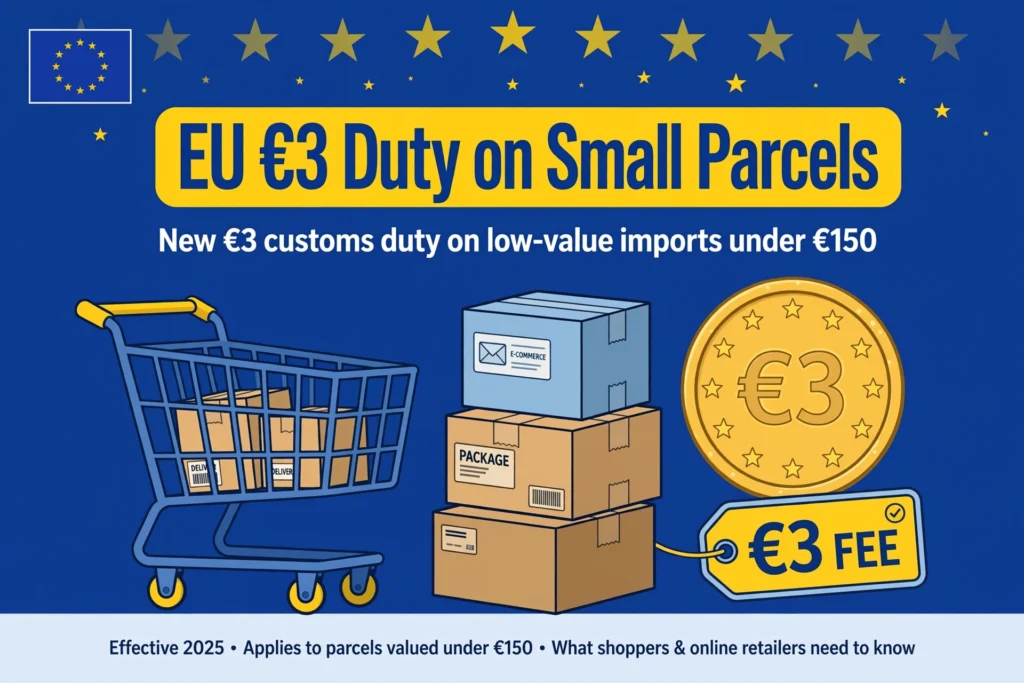
The European Union is introducing a new €3 customs processing fee on many low-value imports, a move that could make online shopping from overseas significantly more expensive. Here's what the new rule means for consumers and businesses.


Millions of online shoppers across the European Union could soon pay more for goods ordered from overseas as Brussels introduces a new customs processing fee aimed at low-value imports.
The new measure comes roughly a year after global trade tensions intensified following U.S. tariff increases under President Donald Trump. While Washington argued that foreign trading partners had benefited unfairly from access to the American market, the European Union is now taking its own steps to address what it describes as unfair competition from low-cost imports, particularly from China.
Under the new proposal, a €3 customs processing charge will apply to imported goods valued at less than €150 entering the EU. The policy is expected to affect billions of online purchases each year, with the overwhelming majority of eligible parcels arriving from Chinese e-commerce platforms.
According to EU estimates, around 91% of the 4.6 billion low-value parcels imported annually originate from China.
Fee Applies to Each Individual Item
Revenue Head of Customs Ray Ryan explained that the charge is calculated per individual item rather than per parcel.
For example, a customer ordering a hat, a T-shirt and a pair of sunglasses in one shipment would pay €9 in customs processing charges, with each product attracting a separate €3 fee.
The change represents a significant shift for consumers who have become accustomed to buying inexpensive products online with little or no additional customs costs.
Mixed Reaction from Shoppers as Public opinion has been divided.
Some shoppers welcomed the measure, arguing it could discourage excessive spending on fast fashion and reduce the environmental impact of disposable clothing.
Others, however, believe the extra cost unfairly penalises ordinary consumers who rely on affordable online retailers. Several shoppers expressed frustration that large orders containing multiple items could become considerably more expensive under the new system.
One customer said she had recently ordered around a dozen items for an upcoming holiday and feared the new rules would add more than €30 to the cost of her purchase if the goods arrived after the policy takes effect.


Why the EU Is Introducing the Charge
EU officials say the new customs fee is intended to help cover the growing cost of processing billions of low-value imports while creating fairer competition for European businesses that must comply with stricter regulatory and tax requirements.
The measure also forms part of broader efforts to tighten oversight of cross-border e-commerce and address concerns over product safety, customs enforcement and environmental sustainability.
For consumers, however, the biggest immediate impact will likely be higher costs when shopping from overseas online marketplaces, particularly those offering inexpensive goods shipped directly from China.