|
Getting your Trinity Audio player ready...
|
⌛️ It’s the weekend! After a long week of work, deadlines, or school, it’s finally time to slow down and relax. For many of us, weekends offer the perfect opportunity to sleep in, stay under the covers, and catch up on our favorite shows or scroll through endless social media feeds. But while it might feel comforting to remain indoors, there’s one small action that can make a big difference in how you feel—getting outside first thing in the morning.
When you wake up, your first instinct might be to grab your phone or turn on the TV. But stepping out into the sunlight, even for just 10–15 minutes, can have powerful effects on your body and mind. That’s because sunlight plays a vital role in regulating your circadian rhythm—your body’s natural internal clock that controls your sleep and wake cycles.
Morning sunlight acts like a natural reset button. It tells your brain, “Hey, it’s time to wake up!” This light exposure triggers the release of hormones like cortisol to help boost alertness and energy levels. At the same time, it helps set the timer for the release of melatonin, the sleep hormone, later in the evening—helping you fall asleep more easily at night.
In fact, researchers have found that people who get consistent morning light tend to sleep better, feel more refreshed during the day, and even experience improved mood and mental clarity.
- Tottenham’s Busy Summer Continues as Omar Marmoush Becomes Eighth Signing

It’s been a busy transfer window for Spurs as Omar Marmoush becomes their 8th summer signing.
Tottenham Hotspur have continued their ambitious summer rebuild, with Egyptian forward Omar Marmoush becoming the club’s eighth signing of the transfer window.
The arrival of Marmoush represents another significant statement from Spurs as they continue to reshape their squad ahead of the new campaign. Known for his pace, movement, versatility and eye for goal, the Egyptian attacker adds another dangerous option to Tottenham’s attacking department.
Marmoush is capable of operating in several positions across the frontline, giving Spurs greater flexibility in attack. His ability to play centrally or from wider areas could prove valuable as the club looks to build a more dynamic and unpredictable attacking system.
Tottenham have been among the busiest clubs in the transfer market this summer, with a clear determination to strengthen multiple areas of the squad. The signing of Marmoush takes their total number of new arrivals to eight, underlining the scale of the club’s rebuild.
For Spurs supporters, the focus will now turn to how quickly the new players can adapt and develop chemistry on the pitch. A busy transfer window can generate excitement, but ultimately, the success of the recruitment will be judged by performances and results.
With Omar Marmoush now added to the growing list of summer arrivals, Tottenham’s message is becoming increasingly clear: the club are not standing still.
Eight signings have already arrived, and the transfer window may not be finished yet.
The Big Question
Can Tottenham turn one of the busiest transfer windows of the summer into a successful season on the pitch?
The new faces have arrived. The expectations are rising.
Now, it is time for Spurs to deliver.
Danchima Media Sports | Football News & Analysis - RUSSIA-UKRAINE WAR: EIGHT SCENARIOS THAT COULD DECIDE HOW THE CONFLICT ENDS
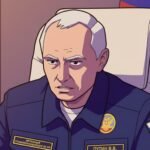
Reports that CIA Director John Ratcliffe may have travelled to Moscow have triggered fresh speculation about the direction of the Russia-Ukraine war and whether secret diplomatic contacts could be laying the groundwork for a possible end to the conflict. Flight-tracking data reportedly showed a U.S. military aircraft travelling towards the Russian capital, followed by sightings of a U.S. diplomatic motorcade. The purpose of the apparent visit remains unclear, and there has been no definitive public explanation confirming the nature of the mission. But the timing is significant.
With concerns growing over the possibility of a wider confrontation between Russia and the West, analysts are increasingly examining what an eventual end to the war could look like. Anton Shekhovtsov, a senior fellow at the Central European University in Vienna, has outlined eight possible scenarios ranging from a decisive Russian victory to a negotiated settlement — and even the possibility of an unexpected event completely changing the course of the conflict.
SCENARIO ONE: RUSSIA ACHIEVES A DECISIVE MILITARY ADVANTAGE
The first scenario would see Russia establish overwhelming battlefield superiority, potentially allowing Moscow to seize full control of the four Ukrainian regions it claims to have annexed and force Kyiv into negotiations from a position of extreme weakness.
However, such an outcome would require Russia to overcome significant military and logistical challenges. The assessment suggests Moscow could need another mobilisation of between 300,000 and 500,000 troops, stronger air defences to protect its rear areas from Ukrainian attacks and a major expansion of AI-assisted drone warfare. For Danchima Media, the key question is whether Russia can achieve such an advantage without imposing unsustainable economic and human costs on itself.
SCENARIO TWO: THE WEST BECOMES EXHAUSTED
Another possibility is that Ukraine’s Western support gradually weakens. This scenario could become more realistic if U.S. assistance falls sharply, Europe experiences a serious energy crisis and Ukraine faces increasing domestic political and economic pressure.
Under such circumstances, Moscow could gain sanctions relief and potentially secure guarantees preventing Ukraine from joining NATO. The war could then come to an end without Russia achieving all of its original military objectives, while Ukraine could still retain a pathway towards European Union membership. The major vulnerability in this scenario is therefore not necessarily the battlefield — but political endurance in Washington and European capitals.
SCENARIO THREE: TRUMP BROKERS A DEAL
Among the scenarios outlined, this is presented as one of the more plausible outcomes. The basic idea is that U.S. President Donald Trump would place heavy pressure on both Moscow and Kyiv to accept a compromise, particularly as the United States approaches the November 2026 midterm elections. Washington could threaten Russia with substantially increased military support for Ukraine while simultaneously warning Kyiv that continued U.S. assistance could be reduced if it refuses negotiations. The resulting agreement could freeze the conflict without producing a comprehensive peace treaty. Russia could receive partial sanctions relief, while Ukraine could be asked to accept restrictions surrounding NATO membership. But such a settlement would remain fragile. The fundamental problem would be trust. Neither Moscow nor Kyiv would necessarily believe that Washington could guarantee the agreement over the long term.
SCENARIO FOUR: A KOREAN-STYLE STALEMATE
The war could also evolve into something resembling the Korean Peninsula’s long-running division. Neither side achieves a decisive breakthrough. The front line stabilises, large-scale fighting decreases and yet no comprehensive peace treaty is signed. Instead, the conflict becomes a permanent frozen confrontation. Drone attacks, missile strikes and smaller military operations could continue even after major battlefield operations decline. This scenario could become increasingly likely if Washington turns its attention elsewhere and European governments are left carrying a greater share of the financial and military burden supporting Ukraine. Russia would gain some economic breathing room, while Ukraine would remain locked in an unresolved security confrontation with Moscow.
SCENARIO FIVE: ANOTHER TWO TO THREE YEARS OF WAR
Perhaps the most dangerous possibility is that nothing changes significantly. Diplomacy fails, neither side achieves a decisive victory and the current pattern of fighting continues for another two or three years. Such a war would not necessarily produce a dramatic battlefield collapse. Instead, the damage would accumulate gradually. Ukraine could face worsening demographic and humanitarian pressures, while Russia would continue operating under economic strain, declining birth rates and the loss of skilled workers. The longer the conflict continues, the more difficult reconstruction and reconciliation could become for both countries.
SCENARIO SIX: A COMPROMISE PEACE
A genuine peace agreement would require both sides to make painful concessions. Under the proposed scenario, Russia could potentially withdraw from parts of southern Ukraine, including Kherson and Zaporizhzhia, while Ukraine could be pushed towards recognising Russian control over Crimea and portions of the Donbas. In return, Kyiv could receive international security guarantees and retain a long-term European and potentially NATO pathway. Such an agreement would almost certainly be politically explosive inside Ukraine. For Kyiv, accepting territorial concessions could be viewed by many as unacceptable. For Moscow, withdrawing from territory it claims as Russian would also carry enormous political consequences. This is why a compromise peace may look logical on paper but remain extremely difficult to sell politically.
SCENARIO SEVEN: PEACE ON UKRAINE AND EUROPE’S TERMS
This represents the most dramatic reversal of Russia’s position.Under this scenario, Russia would withdraw to its internationally recognised 1991 borders, potentially pay reparations and accept Ukraine’s membership of NATO. Crimea could be returned to Ukraine or become subject to a separate negotiated arrangement. But the conditions required for such an outcome would be extraordinary. They could include a catastrophic Russian military defeat, a severe economic collapse, hyperinflation or major political change in Moscow. At present, this remains one of the least likely scenarios identified by Shekhovtsov.
SCENARIO EIGHT: THE WILD CARD
And then there is the factor that makes predicting wars so dangerous: the unexpected. A sudden event could completely change the strategic equation. Possible shocks include the use of a tactical nuclear weapon, an attack or major incident involving the Zaporizhzhia nuclear power plant, a direct confrontation between NATO and Russian forces, political regime change in Moscow or Kyiv, a new Middle Eastern war affecting global oil prices, or a major breakthrough in AI-powered drones and cyberwarfare.
Any one of these developments could rapidly transform the calculations of Russia, Ukraine, the United States and Europe.
THE WAR MAY END WITHOUT A CLEAR WINNER
The most important lesson from these scenarios is that the end of the Russia-Ukraine war is unlikely to be determined by a single battlefield event. The conflict has evolved into a contest involving military power, economic endurance, political will, technology and international diplomacy. Russia may have the advantage of manpower and industrial capacity in certain areas. Ukraine continues to rely heavily on Western military, financial and political backing. Europe is attempting to strengthen its own strategic position, while Washington’s future policy remains one of the most important variables.That makes diplomacy increasingly important. The reported movement of senior U.S. officials towards Moscow, if confirmed as part of diplomatic engagement, would therefore be worth watching closely. It would not automatically mean that a peace agreement is imminent — but direct communication between Washington and Moscow could become increasingly important if both sides conclude that an endless war is more costly than compromise.
The biggest obstacle remains the same: what would each side be willing to give up in exchange for peace?
For Ukraine, the question involves territory, sovereignty and long-term security. For Russia, it involves its military objectives, sanctions, territorial claims and its relationship with the West. For the United States and Europe, it involves determining how far they are prepared to support Ukraine and how much strategic risk they are willing to accept. The war could therefore end through negotiation, exhaustion, stalemate, military transformation or an unpredictable shock. But one thing is becoming increasingly clear: the eventual peace may not look anything like the victory either side originally imagined.
Danchima Media — Political Analysis
So while weekends are meant for rest, don’t let that turn into endless screen time in dark rooms. Instead, open the curtains, step out on your balcony, take a walk, or simply stand in the sunlight for a few quiet moments. It’s a simple, free, and natural way to support your well-being.
Let the sunshine in—and let your weekend start with clarity, calm, and balance.







I don’t think the title of your article matches the content lol. Just kidding, mainly because I had some doubts after reading the article.
Can you be more specific about the content of your article? After reading it, I still have some doubts. Hope you can help me.
Your article helped me a lot, is there any more related content? Thanks!